
Table of Contents
Superhuman Go Investment Report
Category: AI productivity software / cross-app assistants
Company Stage: Mature private software platform; Go is an early product line
Founder(s): Grammarly co-founders Max Lytvyn, Alex Shevchenko, and Dmytro Lider; current CEO Shishir Mehrotra. No separate Go founding team disclosed
Headquarters: San Francisco, California
Funding: Parent Grammarly raised $200M in 2021 at a reported $13B valuation; its 2025 $1B General Catalyst growth financing was reported as non-dilutive. Current equity valuation and Go-specific funding undisclosed
Business Model: Freemium suite subscriptions; Go is bundled into per-seat Superhuman plans
Product Hunt Launch Date: 2026/09/27
Report Date: 2026/10/08
| Investment Metric | Assessment |
|---|---|
| Venture Potential | 74/100 |
| Unicorn Path | Conditional |
| Valuation Attractiveness | Not Assessable |
| Evidence Confidence | 68/100 |
| Final Decision | DD |
Executive Summary
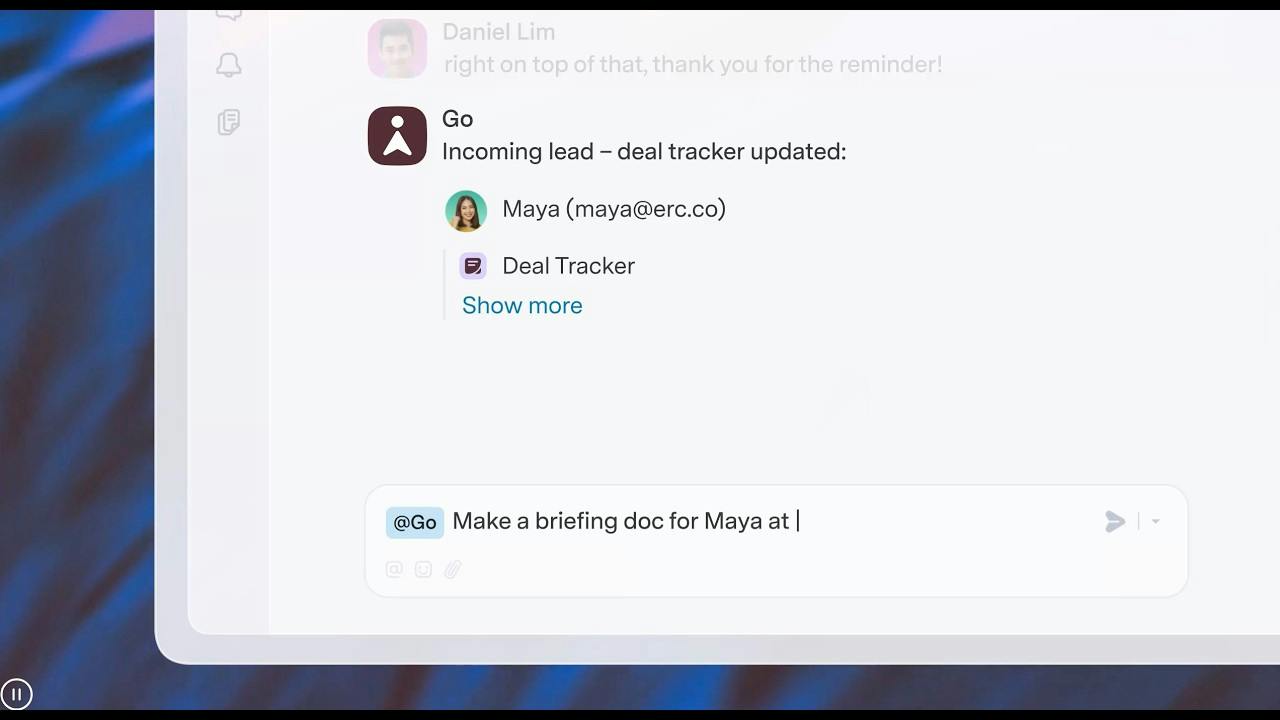
Superhuman Go is a context-aware assistant and agent layer for browser, desktop, and connected work apps. It offers inline writing help, email drafting, meeting preparation, information retrieval, and custom agents. Its thesis is to help professionals act within existing workflows instead of switching to a standalone chatbot. Official overview
The principal positive is distribution: Go is built on Grammarly/Superhuman, whose site reports 40M+ daily users and 50K+ organizations across the suite. These are company-wide figures, not Go adoption. The Chrome listing shows about 20,000 users, while Product Hunt ranked Go #4 with 209 points on launch day. Neither establishes active usage, paid conversion, retention, or product-market fit. Company profile · Chrome listing · Product Hunt
Go has a credible product thesis and a mature parent with established engineering, brand, and enterprise reach. But Go-specific revenue, cohort retention, inference costs, and customer acquisition are not public. Microsoft and Google are embedding agents in their own suites. Recommendation: DD on the parent and Go product line, conditional on product-level economics and current terms; Go is not a separately disclosed investment.
Product Overview
Go progressed from a Chrome beta in October 2025 to version 1.0 on August 12, 2026, with Chrome/Edge, Mac/Windows, web, and mobile availability. It combines inline writing assistance, app connectors, and agents for drafting, search, meeting preparation, and work updates; business customers can create agents. Go 1.0 announcement · Cross-platform update
The problem is fragmented work across email, documents, chat, and project tools. Go seeks to reduce manual search, copy/paste, and routine drafting by using on-screen or connected-app context. Value depends on accurate, timely suggestions and user control: intrusive or incorrect proactive actions can erode trust.
Official suite pricing is Free ($0), Pro ($12/member/month annually; $15 monthly), Business ($33 annually; $40 monthly), and custom Enterprise. Go is included with differing limits and capabilities; these prices are not Go ARPU. Pricing
Founder and Team Assessment
Grammarly’s company history names co-founders Max Lytvyn, Alex Shevchenko, and Dmytro Lider, previously of MyDropBox. Shishir Mehrotra, Coda co-founder, became CEO after Grammarly acquired Coda. Their product and platform experience is relevant, but Go’s product leader, dedicated headcount, and resource allocation are not separately disclosed. Founder history · Company history
LinkedIn lists 1,001–5,000 employees, a self-reported company-wide range. Diligence should establish Go staffing, sponsorship, and integration priorities.
Founder Assessment: Experienced leadership and substantial platform capability; Go-specific ownership and accountability remain unverified.
Market Opportunity
Initial customers are knowledge workers and organizations using multiple apps and willing to pay to reduce routine writing, searching, and coordination. The company says its platform reaches 40M+ daily users, 50K+ organizations, and over one million apps/sites; these company-reported reach figures are not an independently verified addressable market or Go user base. Company profile
A screening scenario—not a forecast—assumes 5–10% of 40M users eventually buy a plan: 2–4M seats. At $144–$396 annual suite list prices, implied annual billed value is roughly $288M–$1.58B before discounts, churn, and costs. Bundled Grammarly and Mail features make this an overstatement of Go-attributable value. The existing organization base and cross-platform distribution offer enterprise and geographic expansion, but Go-specific willingness to pay is unknown. First-party platforms are closing the gap quickly.
Traction and Growth Signals
The Chrome listing shows approximately 20,000 users. Product Hunt recorded #4 and 209 points on September 27, 2026; its page had no reviews when checked. These indicate distribution and launch interest, not active use or retention. Chrome listing · Product Hunt
Parent-level figures are much larger: Superhuman reports 40M+ daily users and 50K+ organizations; a 2025 company announcement reported over 40M daily users and $700M+ annual revenue. These are company-reported suite-wide figures, not audited Go metrics. The 2025 $1B General Catalyst financing was for growth and acquisitions. No Go-specific ARR, paid-seat attachment, activation, retention, expansion, references, or margin is public. 2025 financing announcement
Traction Assessment: Significant parent distribution and visible product activity; commercial traction for Go remains unverified.
Competitive Position
Competitors include Microsoft 365 Copilot, Google Workspace Gemini, Slack AI, and Notion AI. Microsoft and Google place assistants and agents in their own productivity apps and can leverage native account data and bundled distribution. Microsoft Copilot · Google Workspace
Go’s potential edge is cross-vendor breadth, Grammarly’s writing capability, and an installed base that enables cross-selling. No switching costs, network effects, or superior task completion are publicly demonstrated. If Microsoft or Google achieves comparable proactive workflows within six months, Go must prove that portability across vendors, writing quality, and connectors outweigh native permissions and bundling. That differentiation is plausible but unproven.
Defensibility Assessment: Medium-low today; distribution is the clearest advantage, not a demonstrated moat.
Business Model and Economics
Go uses a freemium suite SaaS model with per-seat subscriptions and custom enterprise plans. Pro and Business list at $12 and $33 per seat/month annually ($144 and $396 per year); monthly prices are $15 and $40. Go is bundled, so incremental revenue and standalone willingness to pay are unknown. Mobile store commissions may affect purchases; channel mix is undisclosed.
Subscriptions and existing-user cross-sell could support attractive margins. Offsetting costs include model inference, connectors, indexing, cloud, and support; proactive usage can increase costs without raising a fixed seat price. Margins depend on usage limits, model routing, caching, and enterprise contracts. CAC, conversion, churn, renewal, payback, cost per task, and Go gross margin are not public.
The privacy FAQ says prompts and screen context may be retained in chat history and connected apps indexed; users control training preferences, and enterprise training is off by default. The policy also describes possible use of content for Superhuman model improvement subject to controls. This warrants diligence on consent, retention, deletion, and enterprise settings, not an inference of a breach. Privacy FAQ · Privacy policy
Unicorn Path
At an illustrative 10× ARR, a $1B product valuation implies $100M ARR. At $144–$396 annual seat prices, that equals about 694,000–253,000 paid seats before discount, churn, and cost effects. Suite seats cannot be counted as Go revenue, and parent revenue is not attributable to Go. Product-level unicorn potential is conditional on durable adoption, incremental monetization, and healthy margins—not merely being bundled into a large platform.
Unicorn Path: Conditional.
Valuation Assessment
The latest publicly cited parent equity valuation found is $13B from 2021, now stale and preceding the Coda acquisition, rebrand, and Go expansion. The 2025 $1B financing was reported as non-dilutive and does not establish a current equity price. Current valuation, cap table, and fundraising status are unknown; Go has no disclosed standalone financing. Valuation Attractiveness: Not Assessable. Request current ARR/growth, Go cohorts and incremental ARR, gross margins, burn/runway, cap table, and actual terms. 2021 round · 2025 financing coverage
Key Risks
- Bundling obscures economics: Go revenue and paid attachment are unknown.
- Incumbent replication: Microsoft and Google control core apps and can bundle alternatives.
- Trust and action safety: erroneous suggestions or prompt injection may harm adoption.
- Privacy: screen and connected-app context require clear, configurable controls.
- Inference costs: usage may grow faster than per-seat revenue.
- Integration burden: connectors, platforms, and acquisitions increase reliability costs.
- Parent dependency: distribution, pricing, and staffing rely on suite priorities.
- Valuation uncertainty: no current price or investment terms are disclosed.
Final Assessment
Venture Potential: 74/100
| Category | Score |
|---|---|
| Market Size and Expansion Potential | 17/20 |
| Traction and Growth Evidence | 10/20 |
| Founder and Team | 14/15 |
| Product Strength | 9/10 |
| Distribution Potential | 14/15 |
| Business Model and Economics | 6/10 |
| Defensibility | 4/10 |
| Total | 74/100 |
Distribution, product breadth, and parent resources support a meaningful opportunity. Scores are tempered by absent Go retention/economics and powerful platform competition.
Evidence Confidence: 68/100
Public sources document product, pricing, launch rank, platforms, leadership, and privacy terms. Scale and revenue are company-reported; store users are not active-user data. Go retention, unit economics, current valuation, and terms remain unavailable. The 2021 valuation is not a current mark.
Final Decision: DD
Diligence the parent and Go as a product line, not as a standalone startup. The team and reach merit investigation, but investment requires verified incremental performance and attractive current terms. Historical parent unicorn valuation is not evidence of an attractive entry price.
Upgrade Conditions
Consider Invest only after verifying sustained 90-/180-day retention, paid-seat attachment and expansion, measurable task completion or time saved, positive incremental margin after inference/connectors, repeatable enterprise adoption, and acceptable current terms.
Downgrade Conditions
Pass if Go remains a free feature without retention or incremental revenue, adoption stalls, users disable low-quality suggestions, AI costs compress margins, or incumbent parity eliminates cross-app advantage. Unresolved misuse or privacy controls also warrant a negative decision.
Questions for Further Diligence
- What are Go MAU, paid seats, activation, and 30-/90-/180-day cohort retention?
- What incremental ARR is attributable to Go versus existing bundled subscriptions?
- How do conversion, renewal, expansion, and churn compare between Go users and controls?
- What are Go-led CAC and payback, separated from existing-user distribution?
- What are cost per completed task and contribution margin by model, connector, and plan?
- What share of suggestions/actions are accepted, and what are error and false-positive rates?
- What controls cover prompt history, app indexing, retention, deletion, and model training?
- How are prompt injection and unauthorized connected-app actions prevented and audited?
- What staffing and executive ownership are dedicated to Go versus Mail, Docs, and Grammarly?
- What are current ARR, growth, gross margin, burn, and runway, and which are audited?
- What are current financing terms, valuation, cap table, and investor preferences?
- Why do customers choose Go over Copilot or Gemini, especially within a single-vendor stack?