
Table of Contents
Origin by Cursor Investment Report
Category: Developer tools — AI-native Git hosting / code collaboration
Company Stage: New product line of late-stage company (Anysphere), pending acquisition
Founder or Founders: Anysphere: Michael Truell, Sualeh Asif, Arvid Lunnemark, Aman Sanger; Origin led by Graphite co-founder Tomas
Headquarters: San Francisco, USA
Funding: ~$3.4B raised by parent; $2.3B Series D at $29.3B (Nov 2025); pending ~$60B all-stock acquisition by SpaceX (announced June 16, 2026)
Business Model: Subscription + usage-based; Origin bundled into paid Cursor plans, standalone pricing not disclosed
Product Hunt Launch Date: August 19, 2026
Report Date: August 22, 2026
| Investment Metric | Assessment |
|---|---|
| Venture Potential | 70/100 |
| Unicorn Path | Plausible (within Anysphere); Conditional (standalone) |
| Valuation Attractiveness | Not Assessable |
| Evidence Confidence | 70/100 |
| Final Decision | Watch |
Executive Summary
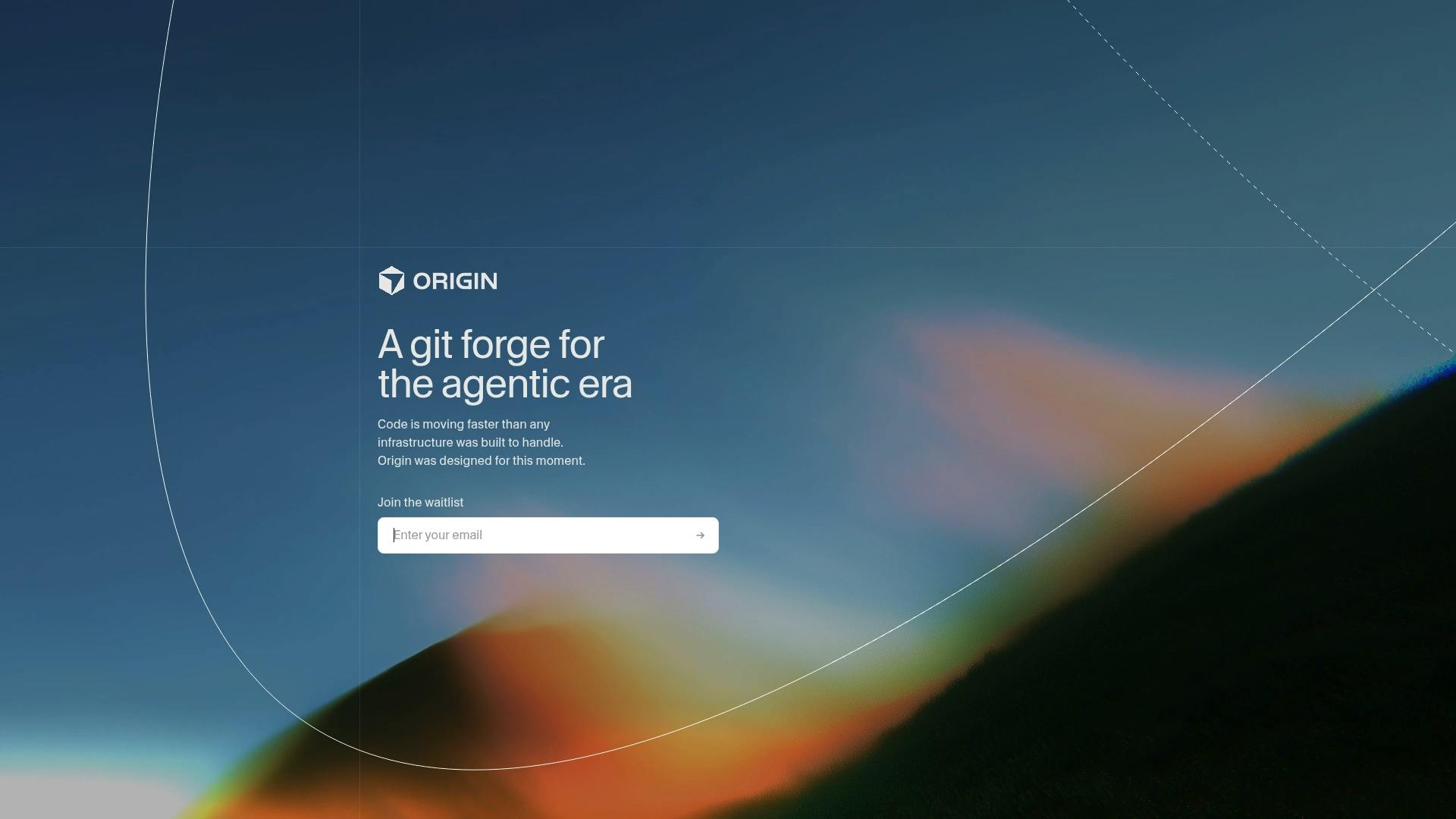
Origin is a Git hosting and code-collaboration platform — “a git forge for the agentic era” — launched by Cursor (Anysphere) and designed so AI coding agents are first-class users of the repository layer rather than bolt-on tooling. It lets developers create and host Git repos inside Cursor, browse and search code, open and review pull requests, manage access, and sync with GitHub. It entered early beta on all paid Cursor plans, with general availability targeted for fall 2026.[1][2][3][4]
The critical framing: Origin is not a startup. It is a product extension of Anysphere, which reported the fastest revenue ramp in software history — roughly $100M ARR in January 2025 to $2B by February 2026, and approximately $4B by May 2026 per secondary tracking — and which SpaceX agreed to acquire for ~$60B in an all-stock deal announced June 16, 2026.[2][5][6][7]
The strongest investment signal is distribution: Origin ships to a base of 1M+ paying Cursor users and reported adoption across more than half of the Fortune 500, giving it a launch wedge no independent competitor can match. The most important concern is that Origin itself is three days post-launch, commercially unverified, unpriced, and strategically entangled in “code custody” trust questions raised by SpaceX/xAI ownership.[4][8][9]
Because direct investment in Origin is not possible — there is no standalone entity, round, or P&L, and parent equity is being converted into SpaceX stock — the decision is Watch, contingent on post-GA commercial evidence.
Product Overview
The customer problem: code is now produced by agents faster than human-centric Git infrastructure was built to handle; review and custody have become the bottleneck. Origin replaces the GitHub-centric workflow with an agent-native forge built on a new cloud-native Git architecture, led by the Graphite team Anysphere acquired in December 2025. Core features include in-Cursor repo hosting, code browsing/search, PR review (inheriting Graphite’s stacked PRs and merge queue), access management, and GitHub sync. Company-claimed performance — roughly 296,000 clones and 81,000 pushes per hour with sub-400ms global sync — comes from secondary reporting of the Compile keynote and is not independently verified. Pricing is not disclosed; beta access is bundled into paid Cursor plans.[1][2][3][4][10][11][12]
Founder and Team Assessment
Anysphere’s four MIT-founded co-founders are verified and have demonstrated exceptional commercial execution, scaling Cursor to a reported $2B+ ARR in under four years. Origin is led by a Graphite co-founder identified in secondary reporting as Tomas, who joined via the December 2025 acquisition — a deal reportedly above Graphite’s $290M prior valuation. Team size for the Origin unit is not publicly disclosed. Key-person risk centers on retention of the Graphite team through the SpaceX acquisition.[10][11][13][14]
Founder Assessment: Proven commercial and technical leadership at the parent level; product-line execution depends on an acqui-hired team whose retention is unverified.
Market Opportunity
The initial customer is narrow and specific: engineering teams already paying for Cursor whose repositories and review workflows remain on GitHub. The AI coding tools market is estimated at $12.8B in 2026 (up from $5.1B two years prior); a separate secondary estimate puts it at $8.5B growing at a 48% CAGR toward $127B by 2032. These conflict; both are secondary, so treat the current market as roughly $8–13B.[8][15]
Bottom-up: with 1M+ paying Cursor users, a 10–20% attach rate at an incremental $10–20/user/month implies $12–48M ARR; enterprise displacement of GitHub at six-figure ACVs is the larger prize, given GitHub’s base of well over 100M developers. The realistic addressable market can support venture-scale revenue, but only if Origin wins workloads beyond Cursor’s own base.[5][8]
Traction and Growth Signals
Origin-specific evidence is thin: 337 upvotes, 10 comments, and #3 Product of the Day on its August 19, 2026 Product Hunt launch; beta availability on paid plans; operation internally and with select partners since June. Parent-level traction is extraordinary but not attributable to Origin: $100M ARR (Jan 2025) → $2B (Feb 2026) → ~$4B (May 2026, secondary tracking); Cursor’s Product Hunt page shows 56K followers and 929 reviews at ~5.0. Missing: Origin active repos, attach rate, paid conversion, retention, and any Origin-attributable revenue.[3][5][6][10][16]
Traction Assessment: Parent traction is exceptional; Origin itself is promising but commercially unverified.
Competitive Position
Direct competitors: GitHub (Microsoft), GitLab, Bitbucket. Indirect: Claude Code’s terminal-centric workflows and Copilot’s GitHub-native agent features. Free alternatives include GitHub’s free tier and self-hosted forges. Origin’s differentiation is the integrated loop — IDE, agents, review (Graphite/Bugbot), and forge in one system, plus a planned proprietary frontier model. If GitHub ships an equivalent agent-native forge within six months — plausible given its Copilot velocity and June 2026 usage-based repricing — Origin’s answer is workflow depth and Cursor lock-in, but GitHub sync also means Cursor concedes coexistence rather than forcing migration. SpaceX/xAI ownership cuts against neutrality: enterprises may hesitate to place crown-jewel code with a vertically integrated model competitor.[2][3][4][6]
Defensibility Assessment: Medium
Business Model and Economics
Cursor monetizes via $20/month Pro and $40/month Business seats plus usage-based overage. Origin is currently an expansion/retention lever inside those plans, not a separately priced product. Likely economics: hosting and syncing Git at the claimed performance tier is infrastructure-intensive, and Anysphere already carries heavy AI inference costs; gross margin is not disclosed. The model’s strength is zero-cost distribution to an existing paid base; its weakness is that monetization depends on future packaging (enterprise seats, compliance tiers) that does not yet exist publicly.[1][8][17]
Unicorn Path
Assume a 10x forward-ARR multiple, appropriate for high-growth developer-infrastructure SaaS and consistent with the ~15x current-revenue multiple in Anysphere’s own pending acquisition. Required revenue for $1B: $100M ARR. Paths: ~100K teams at ~$1K/year incremental; or a 5–10% attach on Cursor’s paying base plus enterprise contracts. That is achievable inside Anysphere’s distribution, but as a standalone business Origin would need to displace entrenched GitHub gravity at enterprises — a materially harder, unproven motion.[18]
Unicorn Path: Plausible as an Anysphere product line; Conditional as a standalone
Valuation Assessment
Origin has no standalone valuation, round, or revenue: Valuation Attractiveness: Not Assessable. Parent context: Series D $2.3B at $29.3B post-money (Nov 2025, Accel/Coatue); reported April 2026 talks above $50B with a $45.21B secondary mark; ~$60B all-stock SpaceX acquisition announced June 16, 2026, expected to close in Q3. One secondary source lists SpaceX as owner since August 14, 2026, implying closing, but primary confirmation was not found. At ~$4B ARR the deal prices near 15x current revenue — full, but supported by unprecedented growth. Any new “investment” is effectively SpaceX/xAI equity exposure, not an Origin bet. Required to assess properly: Origin-attributable ARR, attach rate, pricing, and post-close structure.[2][6][7][14][17][18][19]
Key Risks
- Origin is commercially unverified — beta, unpriced, three days post-launch.[3][4]
- GitHub/Microsoft replication and bundling of agent-native forge features.[6]
- Enterprise code-custody and neutrality concerns under SpaceX/xAI ownership.[4]
- Acquisition closing and integration risk, including regulatory approval and talent retention.[7]
- Switching friction: GitHub’s gravity makes migration, not sync, the real test.
- Infrastructure and inference cost intensity compressing margins (undisclosed).
- Dependence on the retained Graphite team for Origin’s core IP.[10]
- Valuation risk at ~$60B if parent growth decelerates toward market rates.
Final Assessment
Venture Potential: 70/100
| Category | Score |
|---|---|
| Market Size and Expansion Potential | 16/20 |
| Traction and Growth Evidence | 9/20 |
| Founder and Team | 13/15 |
| Product Strength | 7/10 |
| Distribution Potential | 13/15 |
| Business Model and Economics | 6/10 |
| Defensibility | 6/10 |
| Total | 70/100 |
Strongest: distribution into 1M+ paying users and proven parent execution. Weakest: Origin-specific traction and monetization are unproven.
Evidence Confidence: 70/100
Verified: parent funding rounds, founders, Graphite acquisition, product existence and packaging. Company-reported: performance specs, ARR figures (via press). Estimated: $4B May 2026 ARR. Unknown: all Origin commercial metrics; acquisition close status is conflicting across sources.
Final Decision: Watch
Origin pairs elite distribution with zero commercial evidence, and no investable instrument exists while Anysphere converts to SpaceX stock. This fits Watch: promising, too early, structurally uninvestable today.
Upgrade Conditions
- GA ships on schedule (fall 2026) with disclosed pricing
- >10% attach of Cursor’s paid base within two quarters
- Disclosed Origin-attributable ARR or enterprise design-partner conversions
- Acquisition closes without Graphite-team attrition
Downgrade Conditions
- GA slips past fall 2026
- GitHub ships an equivalent agent-native forge
- Enterprise custody backlash or a regulatory block of the acquisition
- Packaging fails to expand ARPU
Questions for Further Diligence
- What share of paid Cursor workspaces have created or migrated repos to Origin?
- What is the pricing and packaging plan at GA — seat, usage, or enterprise tier?
- What are hosting gross margins at the claimed performance tier?
- How many enterprise design partners are running production workloads on Origin?
- Will third-party agents (e.g., Claude Code) be first-class citizens on Origin?
- What contractual code-custody and neutrality commitments exist post-SpaceX close?
- What are the retention terms for the Graphite founding team?
- What SOC 2/compliance posture will Origin carry for Fortune 500 prospects?
- What happens to Origin’s roadmap and the waitlist if the acquisition is blocked?
- What 90/180-day retention are you seeing among beta workspaces?
Sources
- Product Hunt — Cursor (Origin launch page)
- Cursor — Origin (official product page)
- Hunted.space — Origin launch dashboard
- TechTimes — Origin, code custody, and the SpaceX deal
- Pondero — SpaceX $60B acquisition and Compile 2026 announcements (secondary)
- ValueAddVC — Cursor (Anysphere) revenue, funding, valuation (secondary)
- Tech Funding News — reported $2B round at $50B
- Yahoo Finance — Anysphere acquires Graphite
- Tech-Insider — Copilot/Cursor market share 2026 (secondary)
- AgentMarketCap — AI coding revenue race (secondary)