
Table of Contents
- Perplexity Hybrid Compute Investment Report
Perplexity Hybrid Compute Investment Report
Category: AI search, agentic productivity, and hybrid cloud/on-device computing
Company Stage: Late-stage private growth company
Founder or Founders: Aravind Srinivas, Denis Yarats, Johnny Ho, and Andy Konwinski
Headquarters: San Francisco, California
Funding: At least $1.5 billion reportedly raised as of September 2025
Business Model: Consumer and enterprise subscriptions plus usage-based APIs
Product Hunt Launch Date: September 13, 2026
Report Date: September 16, 2026
| Investment Metric | Assessment |
|---|---|
| Venture Potential | 88/100 |
| Unicorn Path | Clear |
| Valuation Attractiveness | Expensive |
| Evidence Confidence | 74/100 |
| Final Decision | DD |
Executive Summary
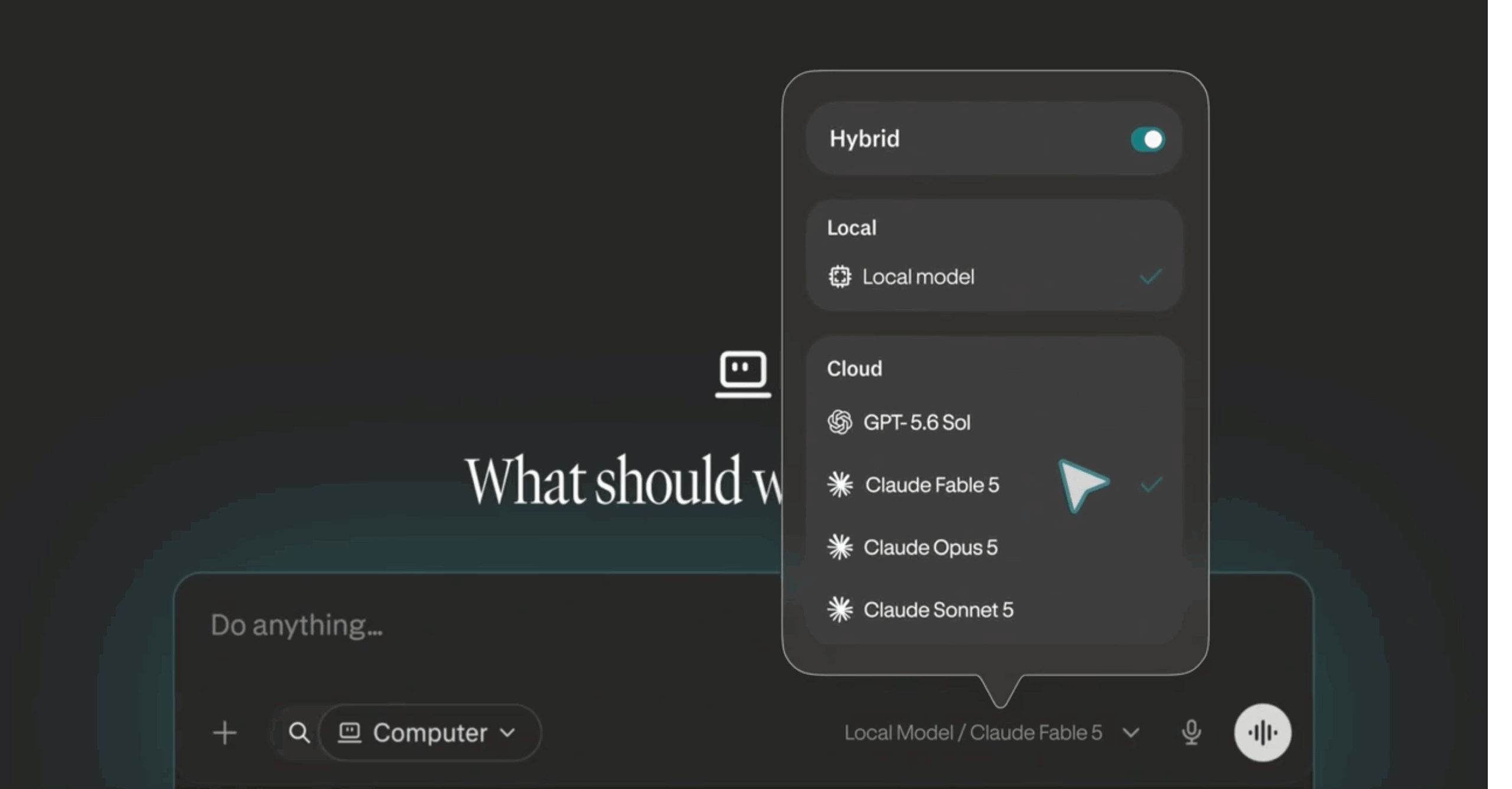
Perplexity Hybrid Compute is a capability within Perplexity Computer that divides agentic tasks between cloud models and models running locally on a user’s Mac. Cloud systems perform web research, planning, and frontier-model reasoning, while the local model handles private files and sensitive operations. A local privacy gate can redact identified personal information, keep a step local, reject it, or request consent before cloud processing (official announcement).
The initial audience is professionals in finance, legal, consulting, healthcare, and other research-heavy sectors who want cloud-model performance without uploading every confidential document. Hybrid Compute is available to Pro, Max, and Enterprise subscribers on Apple-silicon Macs running macOS 15 or later with at least 24GB of unified memory (product page).
This is not an early-stage product attached to an unproven startup. Perplexity has substantial consumer usage, enterprise distribution, multiple monetization channels, and significant funding. The CEO reported 780 million queries in May 2025, while Reuters reported annualized revenue above $750 million by August 2026, up from less than $250 million at the beginning of the year (TechCrunch, Reuters). These figures are company-reported or press-reported rather than audited.
The strongest positive investment signal is the combination of rapid reported revenue growth, extensive distribution, enterprise products, APIs, and frequent product expansion. The principal concern is price: Perplexity reportedly raised at a $20 billion valuation in September 2025 and was discussing new financing above $30 billion in August 2026. That represents approximately 27× to more than 40× reported annualized revenue, before considering unknown gross margin, retention, burn, or contractual revenue quality (TechCrunch, Reuters).
Decision: DD. The company clearly qualifies as venture-scale and is already a unicorn. Investment should depend on confirming revenue quality, gross margin, retention, inference obligations, litigation exposure, and financing terms.
Product Overview
Hybrid Compute addresses a specific enterprise adoption obstacle: cloud AI becomes more valuable when given company context, but confidential files, personal information, and privileged material may not be suitable for cloud processing.
Perplexity Computer decomposes a task across cloud and local agents. The cloud handles research and reasoning; the Mac reads or edits approved local files. Its privacy gate uses an on-device classifier to identify items such as names, addresses, account numbers, credentials, payment-card numbers, and government identifiers before information leaves the device (official product description).
The launch supports three downloadable local models and requires Apple silicon, macOS 15+, and at least 24GB of unified memory, with 32GB recommended. Local work does not consume cloud credits (Hybrid Compute product page).
Hybrid Compute is included in paid subscriptions. Perplexity advertises Free, Pro at $20 monthly, and Max at $200 monthly; Enterprise Pro has been offered at $40 monthly or $400 annually per seat (pricing, Enterprise launch). APIs are priced through combinations of tokens, search requests, tool calls, and sandbox sessions (API pricing).
Product quality appears high because cloud/local orchestration is integrated into an existing agent rather than exposed as infrastructure the customer must assemble. However, its security should not be interpreted as an absolute guarantee: Perplexity’s own PII-Tracer evaluation reported a 0.629 character-level F1 score and 79.4% consistent detection of recurring identifiers under one tested configuration (PII-TRACE research).
Founder and Team Assessment
Perplexity was founded in 2022 by Aravind Srinivas, Denis Yarats, Johnny Ho, and Andy Konwinski. TechCrunch describes the founding team as engineers with backgrounds in AI, distributed systems, search, and databases; Srinivas previously conducted generative-model research at OpenAI (TechCrunch founder profile).
The founders have demonstrated strong technical and commercial execution: they moved from conversational search into enterprise search, APIs, a browser, connected agents, and local computing while raising capital from investors including IVP, NEA, Nvidia, Jeff Bezos, Databricks, and others (official Series B announcement).
LinkedIn lists Perplexity as a 201–500-person company but shows substantially more associated profiles; neither figure should be treated as verified headcount (LinkedIn company page). The company’s careers page and public job board show active hiring across engineering, enterprise sales, finance, legal, security, and product functions (careers).
Founder Assessment: Strong technical, fundraising, product, and commercial execution, with reduced key-person risk relative to early-stage startups.
Market Opportunity
The initial Hybrid Compute segment is research-intensive enterprises that need agents to work across confidential local files and public information. Finance, legal, consulting, healthcare, government, and technology teams are logical early adopters because privacy and auditability can be purchase blockers for cloud-only systems.
Perplexity claims its products are used by more than 50,000 organizations, although paid deployments and seat counts are not disclosed (customer directory). The company previously named customers or pilots including Databricks, Zoom, Bridgewater, Snowflake, HP, Latham & Watkins, and Vercel; these are company-reported references, not verified contract values (Enterprise launch).
An illustrative bottom-up market scenario is:
- 500,000–2 million paid professional seats
- $400 annual Enterprise Pro list price per seat
- $200 million–$800 million potential annual seat revenue
This is an analyst scenario, not a forecast. It excludes API consumption, Max subscriptions, consumer Pro, and negotiated enterprise contracts. Expansion onto Windows and Linux, deeper enterprise controls, industry-specific workflows, APIs, browsers, and device distribution can make the addressable opportunity considerably larger.
Market timing is favorable because businesses increasingly want agents to act on proprietary data, while security teams resist unrestricted cloud upload. The risk is that hybrid inference becomes a standard operating-system or model-platform feature rather than a durable standalone differentiator.
Traction and Growth Signals
Hybrid Compute ranked #2 Product of the Day on Product Hunt for September 13, 2026 (leaderboard). Perplexity’s broader Product Hunt page reports a 4.9 rating across 97 reviews, with praise for speed and cited answers but complaints involving hallucinations, citation matching, and long-thread context (Product Hunt). These reviews cover Perplexity generally, not Hybrid Compute specifically.
More important evidence includes:
- Ten million monthly active users and over 500 million queries during 2023, reported by the company in January 2024 (Series B announcement).
- 780 million queries in May 2025 and reported monthly growth above 20%, according to the CEO (TechCrunch).
- A partnership offering Perplexity Pro to Airtel’s 360 million customers, although eligibility is not equivalent to activation or paid conversion (Airtel).
- Reported annualized revenue above $750 million in August 2026, versus below $250 million at the start of 2026 (Reuters).
- Active expansion across consumer subscriptions, enterprise seats, APIs, connected applications, and local computing.
The missing metrics are audited revenue, paid-user count, net revenue retention, gross margin, customer concentration, promotional-versus-cash revenue, and Hybrid Compute adoption.
Traction Assessment: Strong reported commercial momentum, but revenue quality and unit economics require verification.
Competitive Position
Direct competitors include AI search and enterprise-agent offerings from Google, Microsoft, OpenAI, Anthropic, and Glean. Free alternatives include traditional search, general AI chatbots, local open-source models, and manually separating confidential files from cloud research.
Perplexity’s advantages are its established answer-engine brand, search index and retrieval stack, citations, multi-model access, APIs, broad distribution, and integrated cloud/local orchestration. The PII-TRACE benchmark and 0.6B PII-Tracer model provide a technical asset and public evidence of investment in privacy routing (PII-TRACE).
Its disadvantages are dependence on third-party frontier models, substantial cloud expenses, limited platform control compared with operating-system vendors, and modest switching costs for basic search. Customers may move between providers if answer quality, price, or model access changes.
If the largest platform launched the same feature within six months, why would customers continue using Perplexity? The best answer is Perplexity’s model-neutral orchestration, research-specific user experience, search infrastructure, accumulated brand, integrations, and existing enterprise workflows. This is credible but not impregnable.
Defensibility Assessment: Medium
Business Model and Economics
Perplexity monetizes through Pro and Max consumer subscriptions, enterprise seats, and usage-based APIs. API prices include $5 per 1,000 raw search requests, separate token charges, and fees for agent tools such as web search and sandbox execution (API pricing).
Hybrid Compute may improve economics because work performed locally does not consume Perplexity cloud credits. Conversely, increasingly capable agents may conduct multiple searches, model calls, and tool executions per user request, potentially increasing cost faster than fixed-price subscription revenue.
Critical unknowns include inference gross margin by plan, utilization distribution, third-party model commitments, enterprise discounts, promotional subscriptions, cloud minimum-spend contracts, and customer-support costs. Reuters separately reported a $750 million Azure agreement, though Reuters said it could not independently verify that report; if accurate, it creates significant infrastructure commitment risk (Reuters).
Unicorn Path
A 10× ARR multiple is reasonable for illustrating a high-growth AI subscription and API company, although mature public-software multiples would normally be lower.
Required ARR = $1 billion ÷ 10 = $100 million
That could equal approximately:
- 417,000 Pro subscribers at $240 annually;
- 250,000 Enterprise Pro seats at $400 annually; or
- 41,700 Max subscribers at $2,400 annually.
Reported annualized revenue above $750 million indicates that Perplexity has already passed the revenue threshold typically needed for a $1 billion valuation. It is also already valued well above that level.
Sustaining its current valuation requires converting distribution into retained paying customers, expanding enterprise and API revenue, maintaining strong gross margins, and building defensibility beyond access to third-party models.
Unicorn Path: Clear
Valuation Assessment
Perplexity reportedly raised $200 million at a $20 billion valuation in September 2025, bringing reported total funding to approximately $1.5 billion (TechCrunch). Reuters subsequently reported discussions involving Nvidia and a valuation above $30 billion; that financing was reported as under discussion, not confirmed closed (Reuters).
Using reported annualized revenue above $750 million:
- $20 billion valuation: approximately 27× annualized revenue.
- $30 billion valuation: approximately 40× annualized revenue.
Those are demanding multiples even with reported revenue growth exceeding 3× during 2026. Gross margin and retention are not publicly verified.
Valuation Attractiveness: Expensive
Key Risks
- Valuation requires exceptional growth for multiple years.
- Gross margin may be constrained by model inference, search, and cloud commitments.
- Competition from substantially larger AI and operating-system platforms.
- Copyright litigation from publishers, including ongoing News Corp-related litigation and newer publisher claims (Reuters).
- Citation errors and hallucinations can undermine trust in professional use.
- PII detection is imperfect; missed identifiers could create enterprise liability.
- Dependence on third-party models and commercial access terms.
- Promotional distribution may inflate usage without durable paid conversion.
- Hardware requirements limit near-term Hybrid Compute adoption.
- Revenue, retention, burn, and cash obligations remain unaudited publicly.
Final Assessment
Venture Potential: 88/100
| Category | Score |
|---|---|
| Market Size and Expansion Potential | 20/20 |
| Traction and Growth Evidence | 18/20 |
| Founder and Team | 14/15 |
| Product Strength | 9/10 |
| Distribution Potential | 14/15 |
| Business Model and Economics | 7/10 |
| Defensibility | 6/10 |
| Total | 88/100 |
The strongest factors are market size, reported growth, distribution, product velocity, and team execution. The weakest are uncertain AI economics and defensibility against larger platforms.
Evidence Confidence: 74/100
Product features, pricing, funding through 2024, named investors, API rates, and launch activity are well documented. Later valuation and revenue figures come from reputable press but are not audited public filings. Retention, gross margin, burn, runway, cap table, customer concentration, and current financing terms remain unavailable.
Final Decision: DD
Perplexity merits formal diligence because it has already demonstrated venture-scale revenue and distribution. It should not receive an automatic investment recommendation: the reported valuation embeds aggressive expectations, while unit economics, legal exposure, and current financing terms remain unresolved.
Upgrade Conditions
- Audited confirmation of reported revenue and growth.
- Strong enterprise net revenue retention and low promotional churn.
- Sustainable gross margin after all inference and cloud costs.
- Current financing priced materially below the reported $30 billion discussion.
- Evidence that Hybrid Compute drives enterprise expansion or lower inference costs.
- Manageable cloud commitments and copyright exposure.
Downgrade Conditions
- Material deceleration from reported annualized revenue.
- Gross-margin deterioration from agentic usage.
- Weak conversion after telecom or device promotions expire.
- Adverse copyright judgments or costly licensing requirements.
- Privacy failures involving local files or PII routing.
- Current financing above $30 billion without commensurate verified growth.
Questions for Further Diligence
- What are current GAAP revenue and contracted ARR, excluding promotional and non-cash distribution arrangements?
- What percentage of revenue comes from Pro, Max, Enterprise, API, and other sources?
- What are consumer 30-, 90-, and 180-day retention and annual renewal rates?
- What are enterprise gross retention and net revenue retention?
- How many paying consumer subscribers and paid enterprise seats are active?
- What is gross margin by product after model, search-index, and cloud costs?
- Does Hybrid Compute measurably reduce inference cost or increase paid conversion?
- What are CAC and payback periods by consumer, enterprise, telecom, and device channel?
- What minimum-spend obligations exist under cloud and model-provider agreements?
- What are current burn, runway, cap-table structure, and employee-option dilution?
- What valuation and preferences apply to the current financing round?
- What reserves and mitigation plans cover copyright, privacy, and publisher litigation?
Sources
- Product Hunt: Perplexity
- Product Hunt daily leaderboard
- Official Hybrid Compute announcement
- Hybrid Compute product page
- Perplexity pricing
- Perplexity API pricing
- PII-TRACE research
- Official Series B announcement
- TechCrunch: $20 billion financing
- Reuters: reported revenue and financing discussion
- Airtel partnership announcement