
Table of Contents
Chert Investment Report
Category: B2B communications infrastructure / AI messaging agents
Company Stage: Pre-seed / accelerator-stage
Founder or Founders: Gary Gao and Ian Fong
Headquarters: San Francisco, California; corporate headquarters not independently verified
Funding: Backed by Y Combinator; founders also report Z Fellows, Beta Fund, and angel backing. Amount and terms not publicly disclosed
Business Model: Usage- or line-based B2B software/API; public pricing not disclosed
Product Hunt Launch Date: May 19, 2026 for iMessage agents; August 16, 2026 for the FaceTime product
Report Date: August 19, 2026
| Investment Metric | Assessment |
|---|---|
| Venture Potential | 61/100 |
| Unicorn Path | Conditional |
| Valuation Attractiveness | Not Assessable |
| Evidence Confidence | 46/100 |
| Final Decision | Watch |
Executive Summary
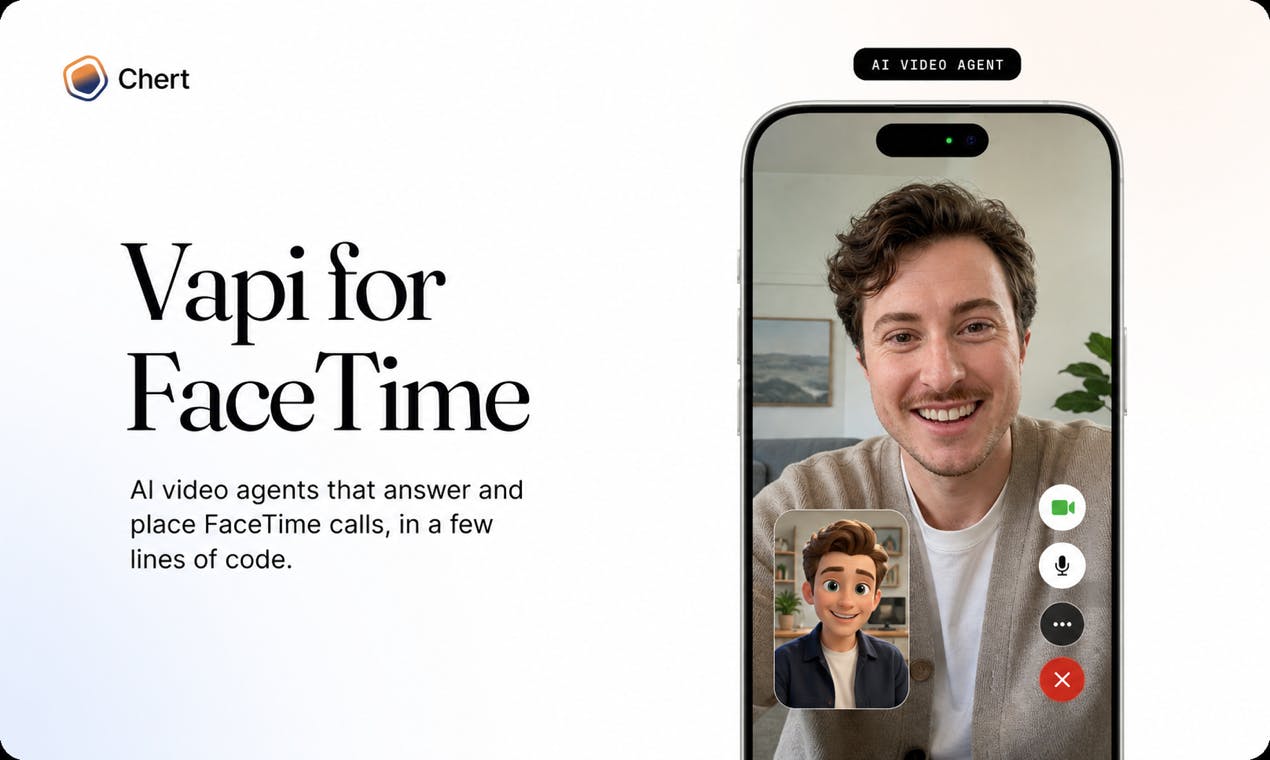
Chert provides infrastructure for businesses to send, receive, route, and automate conversations over iMessage. Its current website emphasizes iMessage agents for customer service, lead qualification, appointment scheduling, and outbound follow-up, with API access, webhooks, media, CRM integrations, human handoffs, and SMS/RCS fallback. A newer product extends the concept to AI video agents that can answer or place FaceTime calls, although that functionality remains in private preview (official website; FaceTime page).
The product addresses a real infrastructure gap: Apple does not provide a broadly accessible, Twilio-like iMessage API for arbitrary automated business outreach. Chert abstracts the devices, sending identities, line monitoring, routing, and integrations that businesses would otherwise need to operate themselves. If reliable and compliant, this can create meaningful customer value in high-response, appointment-driven workflows.
The strongest investment signals are the founders’ demonstrated speed of execution, admission to Y Combinator, and evidence that the product has progressed beyond a simple demonstration. Chert’s site names several “trusted by” organizations and describes production primitives such as number pools, audit trails, fallback channels, and delivery webhooks. However, these logos and claims are company-reported; no independently verified customer case studies, contract values, retention figures, or revenue metrics were found (official website).
The central concern is platform risk. Chert says it rotates and gradually warms sending identities to remain below Apple’s throttling heuristics. Apple’s iCloud terms prohibit unsolicited promotional messaging, automated access that disrupts the service, and resale of the service. Apple can suspend accounts and change access conditions (Chert FAQ; Apple iCloud terms). This makes the core infrastructure vulnerable to technical or policy intervention by a platform that Chert does not control.
The company could become venture-scale if it turns its channel infrastructure into a broader, compliant customer-conversation platform spanning iMessage, FaceTime, SMS/RCS, voice, and CRM workflows. At present, commercially verified traction is insufficient for formal diligence. Final decision: Watch.
Product Overview
Chert’s initial customer is a B2C company or customer-facing team that wants to communicate through Apple’s messaging ecosystem without operating its own devices, accounts, and phone lines. Likely use cases include property tours, appointment reminders, lead follow-up, customer support, order updates, and AI-agent conversations.
The iMessage product provides native blue-bubble conversations, inbound and outbound messaging, reactions, typing indicators, attachments, delivery status, multiple sending identities, human/AI handoffs, webhooks, audit trails, CRM synchronization, and SMS/RCS fallback. The website names Salesforce, HubSpot, Attio, Close, GoHighLevel, Slack, and Vapi as integration targets (official website).
The FaceTime product follows a three-step workflow: configure the model and instructions, select an avatar/persona and framing, and deploy it to a managed FaceTime line. It targets visual-support scenarios such as telehealth intake, field service, onboarding, and inspection. Live FaceTime execution remains a controlled private preview rather than generally available production infrastructure (FaceTime product page).
Public pricing is not disclosed. Chert’s terms state that pricing, usage limits, and contract length are specified through an order form, statement of work, or checkout flow (terms). By comparison, direct competitor Sendblue publicly offers an inbound production line for $100 per month and custom enterprise pricing for outbound use (Sendblue pricing).
The primary benefit is access to a consumer communication channel that may feel more immediate and trusted than email or conventional business SMS. Existing alternatives include Twilio SMS/RCS, WhatsApp Business, Apple Messages for Business, email, voice agents, manual employee-operated phones, and competing managed iMessage APIs.
Founder and Team Assessment
Chert was founded in 2026 by CEO Gary Gao and CTO Ian Fong, according to Y Combinator.
Gao’s public profile identifies him as a University of Pennsylvania computer-science and Wharton student with prior machine-learning, product, research, and analytics experience. It also reports work on neuromorphic computing and several software projects, but no prior company exit or scaled enterprise-sales history (Gary Gao profile).
Fong’s profile lists mathematics, computer science, and economics studies at NYU, software-engineering experience, Stanford research assistance, and multiple hackathon projects and awards. He appears capable of rapid full-stack technical execution, although his record does not yet establish experience operating highly reliable communications infrastructure at enterprise scale (Ian Fong profile).
LinkedIn reports Chert as a small, privately held company with 2–10 employees. The exact number of full-time employees, ownership structure, hiring plan, and founders’ university status are not independently verified (company profile). Concurrent education and other listed activities create a diligence question around full-time commitment, although participation in YC and relocation to San Francisco are positive signals.
Founder Assessment: Strong early technical execution and unusually high builder velocity, but enterprise operating experience, commercial capability, and full-time commitment require verification.
Market Opportunity
The narrow initial segment is US B2C companies with high-value leads or appointments where a faster response can materially improve conversion—for example, real estate, home services, healthcare intake, recruiting, education, hospitality, and local services.
A reasonable bottom-up scenario is 20,000–50,000 suitable US businesses, an analyst assumption rather than a verified customer count. With an assumed annual contract value of $12,000–$60,000, representing multiple lines, API access, automation, support, and enterprise controls, the initial addressable revenue would be approximately:
- Low case: 20,000 × $12,000 = $240 million annually
- High case: 50,000 × $60,000 = $3 billion annually
These figures describe possible spend, not attainable revenue. The low end may be constrained by inexpensive competitors and self-hosted alternatives, while the high end requires enterprise-grade compliance, reliability, and measurable conversion lift.
Expansion opportunities include FaceTime/video agents, SMS and RCS orchestration, voice agents, workflow automation, conversation intelligence, vertical applications, international messaging channels, and transaction-based revenue. Timing is favorable because AI agents increasingly need communication channels, but Apple’s lack of an authorized open iMessage API makes both the opportunity and the principal risk unusually large.
Traction and Growth Signals
Chert’s first Product Hunt launch occurred on May 19, 2026 and had no public reviews at the time researched. A second FaceTime-focused launch occurred on August 16, 2026 (Product Hunt). Launch attention is a weak signal and does not establish product-market fit.
The official site displays customer or user logos including Whop, Vela, Tour, Symbal, and others, while YC states that Chert is already working with B2C startups, customer-experience teams, and sales teams (official site; YC company page). No contract size, deployment scope, customer reference, paid status, or retention evidence accompanies these claims.
Chert markets a “10× reply rate versus cold email,” while a founder has separately reported a 75% reply rate in an outbound test. These are company-reported claims, apparently based on selected campaigns, and are not sufficient to infer normalized customer performance.
Revenue, MRR, growth, active lines, message volume, paying customers, gross retention, net retention, pipeline conversion, and gross margin are not publicly disclosed. No independent marketplace reviews or long-term customer case studies were found.
Traction Assessment: Encouraging customer experimentation and rapid product iteration, but commercially unverified.
Competitive Position
Direct competitors include Sendblue, Blooio, LoopMessage, and self-hosted tools such as BlueBubbles. Indirect competitors include Twilio, WhatsApp Business, Apple Messages for Business, email platforms, CRM sequencing products, and AI voice companies such as Vapi.
Chert’s differentiation is the combination of managed iMessage infrastructure, AI automation, CRM integration, human handoff, SMS/RCS fallback, and emerging FaceTime support. Its rapid movement from messaging to video suggests broader product ambition.
Switching costs could develop through workflows, number reputation, CRM history, compliance systems, routing logic, and performance data. Today, however, proprietary data and network effects are not demonstrated. Competitors can offer similar APIs, and customers can migrate if telephone numbers and conversation records are portable.
If Apple or Twilio launched the same capability within six months, why would customers stay? The credible answer would need to be superior vertical workflows, multi-channel orchestration, accumulated compliance infrastructure, measurable conversion performance, and deep CRM integration. Those advantages are not yet proven.
Defensibility Assessment: Low
Business Model and Economics
Chert appears to use negotiated B2B contracts with line- and/or usage-based fees. Exact pricing and free-plan availability are not publicly disclosed.
Potential gross margin could be SaaS-like at scale, but costs include Apple devices or hosted Mac capacity, telephone numbers, account provisioning, SMS/RCS fallback, cloud infrastructure, AI inference, monitoring, customer integration, compliance, and manual intervention when sending identities are restricted. Chert’s need to rotate and warm identities may make infrastructure and operations less efficient than standard API software.
AI inference should be a relatively small cost for text workflows if customers pay per line or usage. FaceTime agents would have materially higher real-time video, voice, model, and orchestration costs. Revenue must scale faster than those media and support costs for attractive margins.
Customer acquisition may combine founder-led sales, YC referrals, developer adoption, and outbound campaigns using Chert itself. Expansion revenue could come from additional lines, message volume, channels, agents, users, enterprise controls, and managed integrations.
Unicorn Path
Assume an 8× forward-revenue multiple, appropriate only for a fast-growing communications-software company with strong retention and healthy gross margins. Mature or slower-growing messaging businesses would likely receive a lower multiple.
Required annual revenue:
$1 billion ÷ 8 = approximately $125 million
Illustrative customer requirements:
- At $12,000 ACV: approximately 10,400 customers
- At $30,000 ACV: approximately 4,200 customers
- At $60,000 ACV: approximately 2,100 customers
The $12,000 scenario appears operationally difficult for a small company selling a compliance-sensitive product. A more credible route requires $30,000–$60,000+ enterprise ACV, strong multi-line expansion, and low churn.
Chert would also need to reduce single-platform dependency, establish an authorized or durable operating basis, prove gross margins above roughly 70%, and become a multi-channel customer-conversation layer rather than a narrow iMessage workaround.
Unicorn Path: Conditional
Valuation Assessment
Y Combinator backing is verified, but the amount invested specifically in Chert, any additional financing, SAFE cap, post-money valuation, investor ownership, and current fundraising status are not publicly disclosed. Founder profiles mention Z Fellows, Beta Fund, and angels, but no primary financing announcement with terms was found.
Revenue and growth are also unknown. Consequently, comparable-company multiples cannot be applied responsibly.
Valuation Attractiveness: Not Assessable
Assessment requires current ARR, growth, gross margin, customer concentration, retention, burn, runway, round size, SAFE cap or post-money valuation, dilution, option pool, liquidation preferences, and pro-rata rights.
Key Risks
- Apple platform intervention: Account suspension, protocol changes, or enforcement against automated/resold iMessage access could impair the core product.
- Unverified commercial traction: No reliable revenue, retention, paying-customer, or usage data is public.
- Legal and compliance exposure: Outbound messaging creates TCPA, consent, opt-out, privacy, and anti-spam obligations.
- Channel-abuse risk: Aggressive customer campaigns could damage sending identities and Chert’s reputation.
- Weak current defensibility: Competitors can reproduce APIs, automation, and CRM integrations.
- Operational intensity: Device fleets, accounts, line health, fallback routing, and support may depress gross margin.
- Customer concentration: Early revenue may depend on a small number of design partners.
- Founder and key-person risk: The young two-founder team has limited demonstrated enterprise operating experience.
- FaceTime execution risk: Real-time multimodal agents remain in private preview and may be expensive or unreliable.
- Security and privacy: Chert processes message content, recipient identifiers, attachments, integration data, and AI workflows (privacy policy).
Final Assessment
Venture Potential: 61/100
| Category | Score |
|---|---|
| Market Size and Expansion Potential | 16/20 |
| Traction and Growth Evidence | 7/20 |
| Founder and Team | 11/15 |
| Product Strength | 8/10 |
| Distribution Potential | 9/15 |
| Business Model and Economics | 6/10 |
| Defensibility | 4/10 |
| Total | 61/100 |
The strongest elements are a genuine infrastructure gap, fast technical execution, YC backing, and opportunities to expand into broader agent communication. The weakest are unverified traction, severe Apple dependency, uncertain unit economics, and limited demonstrated defensibility.
Evidence Confidence: 46/100
Founder identities, YC participation, legal entity name, product functionality, public policies, and launch dates are reasonably verified. Customer logos, response rates, investor references, and current deployment claims are company-reported. Revenue, retention, customer count, funding terms, margins, burn, runway, and valuation remain unavailable.
Final Decision: Watch
Chert is more compelling than a typical Product Hunt experiment, but public evidence does not yet justify formal diligence. The market could support a venture-scale company, yet the current architecture appears exposed to platform enforcement and operational complexity. Valuation attractiveness cannot be assessed.
Upgrade Conditions
- Verify at least $1 million ARR or equivalent contracted recurring revenue.
- Demonstrate strong six- and twelve-month gross revenue retention.
- Provide three or more referenceable production customers.
- Show gross margin above 70% after device, line, fallback, AI, and support costs.
- Establish repeatable acquisition outside founder networks and Product Hunt.
- Document a durable legal and technical basis for iMessage operations.
- Demonstrate that customers expand line count or channel usage over time.
- Convert FaceTime from private preview into reliable paid deployments.
Downgrade Conditions
- Apple disables or materially restricts sending identities or device infrastructure.
- Customer churn rises after initial campaign novelty fades.
- Reported response-rate improvements fail to translate into customer ROI.
- Gross margin remains structurally limited by manual operations.
- A security, privacy, consent, or TCPA incident occurs.
- Founders cease full-time work or product activity declines.
- Better-capitalized competitors replicate the multi-channel offering.
Questions for Further Diligence
- What are current ARR, MRR, monthly growth, and contracted backlog?
- How many paying customers and active production lines are operating today?
- What percentage of website logos represent paying production customers?
- What are 30-, 90-, and 180-day customer retention and net revenue retention?
- What is median ACV, and how much revenue is line-based versus usage-based?
- What are gross margins after devices, numbers, AI, SMS fallback, and support?
- How frequently are Apple identities throttled or suspended, and what is recovery cost?
- Has counsel reviewed Chert’s infrastructure against Apple terms, TCPA, and state privacy law?
- What percentage of outbound recipients supplied documented prior consent?
- What are burn, runway, team structure, and each founder’s full-time commitment?
- What are the cap table, prior SAFE terms, current valuation, and proposed round terms?
- What enduring advantage remains if Apple, Twilio, or Sendblue matches the feature set?