
Table of Contents
Pushary Investment Report
Category: AI-agent governance, developer tools, and human-in-the-loop infrastructure
Company Stage: Bootstrapped pre-seed / early commercial
Founder or Founders: Aadil Ghani
Headquarters: Tallinn, Estonia; founder based in Berlin, Germany
Funding: Self-funded by RalphNex OÜ; no external financing publicly verified
Business Model: Subscription SaaS for individual developers, teams, embedded approvals, and web-push customers
Product Hunt Launch Date: September 18, 2026 for the latest launch; earlier versions launched in 2026
Report Date: September 22, 2026
| Investment Metric | Assessment |
|---|---|
| Venture Potential | 58/100 |
| Unicorn Path | Conditional |
| Valuation Attractiveness | Not Assessable |
| Evidence Confidence | 58/100 |
| Final Decision | Watch |
Executive Summary
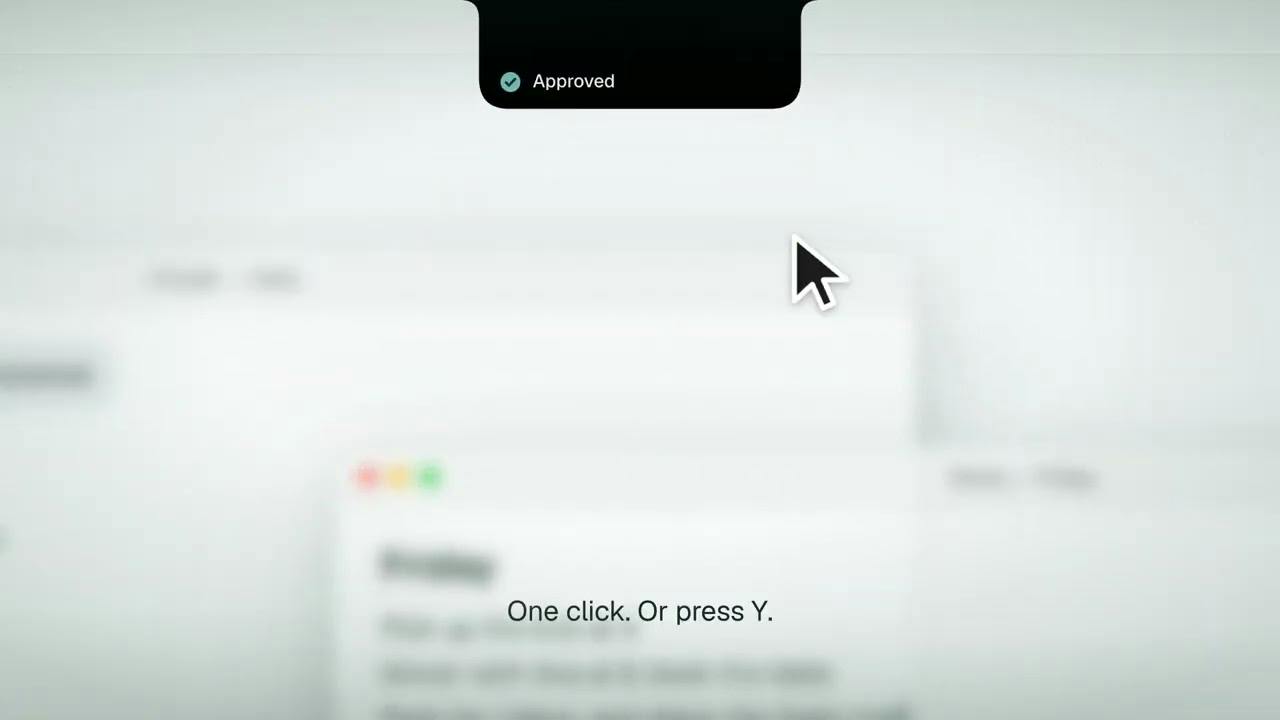
Pushary is a human-in-the-loop control layer for AI agents. It sends approval requests, questions, completion notices, and errors from coding agents to a user’s phone, Mac notch, Slack, or browser. Users can approve or deny an action, select an option, or provide a written response without remaining at their terminal. It currently supports integrations with Claude Code, Codex, Cursor, Windsurf, Hermes, and MCP-compatible agents (Pushary).
The product addresses a credible emerging problem: autonomous coding agents often stop when they need permission to execute a command, modify a file, deploy software, or take another consequential action. Pushary reduces idle time while maintaining a human approval checkpoint. The broader proposition is potentially more important than mobile notifications: Pushary is developing a policy and audit layer that decides whether agent actions should be allowed, denied, or escalated to a human (About Pushary).
Product quality appears promising. Native iOS and Android applications are available, a Mac application can be downloaded directly, and numerous integration packages are published on GitHub. The technical documentation is unusually detailed for a solo-founder product and addresses persistence, duplicate execution, stale approvals, customer identity, signed callbacks, and recovery from uncertain execution states (Pushary GitHub).
Commercial evidence remains weak. Google Play reports only 50-plus downloads, the iOS application has insufficient ratings to display an overview, and the latest Product Hunt launch received approximately 185 votes and one review. Revenue, active users, paying customers, retention, conversion, and unit economics are not publicly disclosed (Google Play, App Store, Product Hunt reviews).
Pushary also faces severe platform risk. Anthropic already offers remote access to local Claude Code sessions, and OpenAI lets users monitor, steer, and approve Codex work through the ChatGPT mobile application. Pushary’s cross-agent policy and audit layer is broader, but native agent providers can commoditize its initial approval-notification feature (Anthropic, OpenAI). The final decision is Watch pending evidence that Pushary can move beyond a useful solo-developer utility into a defensible enterprise control plane.
Product Overview
Pushary connects locally or remotely running AI agents with decision surfaces on mobile, macOS, Slack, and the web. A lightweight agent hook or MCP integration intercepts supported prompts, sends the relevant question and tool information to Pushary, and returns the user’s answer to the agent.
The core product includes:
- Approve or deny tool calls from a phone
- Multiple-choice and free-text responses
- Rules for automatically approving low-risk actions
- Escalation of destructive or irreversible actions
- Timeouts with predefined outcomes
- Multi-agent status and cost monitoring
- An audit trail of questions and decisions
- A global agent kill switch
- Slack, browser, iOS, Android, and Mac interfaces
- SDK and framework integrations for embedding approvals into third-party products
Pushary states that routine decision paths send the question, tool name, interaction type, limited context, and decision—not readable source files or diffs. However, sessions launched through Pushary synchronize locally redacted and encrypted transcripts by default. The phone can decrypt those transcripts, and authorized Pushary compliance administrators can recover a session for documented legal obligations. Users can disable synchronization (Privacy Policy).
Pricing is clearly published. The Agent plan costs $9.99 monthly for one agent and 5,000 monthly notifications. Agent Pro costs $19.99 for multiple agents and unlimited notifications. Team costs $59.99 monthly for up to ten members, while an embedded Partner product costs $99 monthly for up to 25,000 end users and 100,000 notification deliveries (About Pushary). A limited free plan is described in the terms, while paid plans have a three-day trial (Terms).
The product is functional and available. The iOS application was at version 1.0.27 and updated one day before this report, providing evidence of active development (App Store).
Founder and Team Assessment
Aadil Ghani founded Pushary in December 2025 and remains its principal developer. His public profile describes full-stack experience with TypeScript, React, and Next.js and previous engineering positions at JUCR, PULT, OneFootball, and other technology companies (Aadil Ghani).
Ghani reports previously co-founding Automaticall, an AI calling product selected for an Antler program, and claims it reached 2,000 paying users through marketplace distribution. This is a founder-reported claim and was not independently verified. No verified exit was found.
The official site calls Pushary a “small team,” while LinkedIn shows one associated employee. The available evidence therefore supports treating Pushary as founder-led and effectively solo-operated unless diligence demonstrates otherwise (Pushary LinkedIn, About Pushary).
The founder’s profile simultaneously lists continuing roles at Glorya and GalaxyVoice. It is unclear whether these are active operating commitments, residual advisory positions, or outdated profile entries. Founder commitment must be clarified.
The legal operator is RalphNex OÜ, an Estonian company formed in March 2024. Public-record-derived data reports €94,052 of 2025 revenue and €54,705 of profit, entirely classified as computer consulting. This predates Pushary’s current agent-control positioning and should not be interpreted as Pushary product revenue (CorpInfo).
Founder Assessment: Strong hands-on product engineering and rapid iteration, but key-person risk, limited enterprise experience, and uncertain full-time focus remain material.
Market Opportunity
The narrow initial customer is a developer who runs one or more coding agents locally, allows them to execute tools, and wants to leave the terminal without blocking progress. The customer must experience enough unattended approval events to justify another subscription.
OpenAI reports more than four million weekly Codex users, providing a useful—though incomplete—reference point for the potential developer audience (OpenAI). Pushary also supports competing agents, but those user populations overlap and should not be added together.
A conservative illustrative calculation is:
- 4 million reachable weekly coding-agent users
- 5% paid penetration
- $120 annual Agent-plan revenue
- Implied ARR: $24 million
This is an analyst scenario, not a forecast. At 10% penetration and a $180 blended annual revenue per user, the same base would produce $72 million. These scenarios show that individual developer subscriptions could create a substantial business, but likely not a unicorn without broader reach.
The larger opportunity is agent governance for teams and software vendors: approval policies, customer-facing decisions, immutable audit records, identity, routing, and authorization across heterogeneous agents. This could command materially higher annual contract values than mobile notifications alone.
Traction and Growth Signals
Pushary has launched multiple iterations. Public Product Hunt records show launches in March and June 2026, the founder reports a number-two Product of the Day result on July 24, and the latest Mac-notch launch ranked eighth on September 18 with approximately 185 votes (Product Hunt, Aadil Ghani).
Repeated launches show active iteration but not cumulative commercial momentum. LinkedIn posts indicate that Pushary initially targeted browser push notifications and B2B marketing before pivoting toward AI-agent notifications and approvals in May 2026 (Pushary LinkedIn). The legal terms continue to cover both products.
More reliable current traction indicators are limited:
- Google Play shows 50-plus downloads.
- Apple reports insufficient ratings for an overview.
- Product Hunt displays one review.
- The GitHub organization contains approximately 20 repositories and integrations for multiple agent frameworks.
- The application and public repositories show recent updates.
Three testimonials appear on the company website, but they are company-selected and do not establish retention or payment.
The most important missing metrics are paying subscribers, active connected agents, approvals per user, trial conversion, churn, partner integrations, and subscription revenue.
Traction Assessment: Technically active and publicly available, but commercially unvalidated.
Competitive Position
Direct competitors include remote-control and agent-management products such as HumanLayer, Happy, Omnara, and Forge Remote. Free technical alternatives include custom webhooks, Slack bots, ntfy, Pushover, and framework-level human-in-the-loop implementations.
More strategically dangerous are the agent platforms themselves. Anthropic’s Remote Control connects Claude Code to its mobile and web applications while execution remains local. OpenAI’s Codex mobile functionality supports remote monitoring, instructions, and approvals and is available across all plans, including Free and Go (Anthropic, OpenAI).
LangChain also provides middleware that pauses tool calls and supports approval, editing, rejection, and direct human responses. Developers can combine that framework functionality with an internal interface rather than paying Pushary (LangChain).
Pushary’s differentiation is cross-agent coverage, native lock-screen approvals, shared policies, audit history, multiple delivery surfaces, and an embedded Partner product. The public integration code and MCP compatibility can support distribution, but they do not create a strong technical moat.
If the largest platforms launched the same functionality within six months, individual developers would have little reason to pay Pushary for a single agent. Customers might remain for cross-agent policies, consolidated auditability, neutral governance, and embedded approvals. Those higher-value capabilities are not yet commercially validated.
Defensibility Assessment: Low
Business Model and Economics
Pushary combines low-priced self-service SaaS with a potential infrastructure product:
- Agent: $119.88 annualized
- Agent Pro: $239.88 annualized
- Team: $719.88 annualized
- Partner: $1,188 annualized
The individual plans may have attractive gross-margin potential because Pushary does not pay for the underlying AI inference. Customers supply their own agent and model subscriptions. Variable costs primarily involve push delivery, storage, authentication, event processing, mobile infrastructure, support, and payment processing.
The Partner plan has stronger expansion potential but may be underpriced if it includes 25,000 end users, 100,000 deliveries, durable decision storage, and integration support. Enterprise reliability, security reviews, and customer support could make this plan service-intensive.
Mobile subscriptions incur Apple or Google platform fees. Direct web billing through Stripe avoids those commissions but does not eliminate payment costs. Actual gross margin, infrastructure cost per decision, refunds, and support burden are unknown.
Unicorn Path
An agent-governance SaaS company with strong recurring growth and high gross margins might support an 8× ARR multiple. This is an analyst assumption, reflecting both software scalability and substantial platform risk.
Required ARR = $1 billion ÷ 8 = approximately $125 million.
At current pricing, that would require approximately:
- 1.04 million Agent subscribers at $120 annually; or
- 521,000 Agent Pro subscribers at $240 annually; or
- 174,000 Team accounts at $720 annually; or
- 105,000 Partner accounts at $1,188 annually.
Those customer counts are unrealistic for the current narrow notification utility. A more credible route would require 12,500 enterprise customers at an illustrative $10,000 annual contract value, or fewer customers at larger governance-platform contracts.
Pushary would need to become a vendor-neutral authorization, policy, identity, and audit layer for production agents—not merely a mobile remote control. It would also require enterprise sales, independent security audits, stronger service guarantees, role-based approval routing, integrations with corporate identity systems, and a larger team.
Unicorn Path: Conditional
Valuation Assessment
No external funding, institutional investor, recent financing round, SAFE cap, or valuation was found. GitHub states that the project is fully funded by RalphNex OÜ. Public records show modest profitable consulting activity at the legal entity in 2025, but no Pushary-specific financial breakdown.
Valuation Attractiveness: Not Assessable
Assessment requires product ARR, monthly growth, gross margin, trial conversion, retention, cash balance, burn, founder ownership, cap table, current round size, valuation, option pool, and investor rights.
Key Risks
- Native platform bundling: Anthropic and OpenAI already provide mobile remote control.
- Weak commercial traction: App-store and review activity remains minimal.
- Feature-versus-company risk: Approval notifications may be a useful feature but not a standalone venture-scale platform.
- Founder concentration: Product, engineering, sales, and operations appear heavily dependent on one person.
- Security liability: Incorrectly approved, duplicated, stale, or delayed actions can affect production systems.
- Lack of independent audits: Pushary explicitly has no SOC 2, ISO 27001, or independent platform attestation.
- Limited willingness to pay: Developers may prefer free native tools or simple notification scripts.
- Low switching costs: MCP adapters and approval interfaces are reproducible.
- Strategic inconsistency: The company recently pivoted from marketing notifications to agent control.
- Privacy complexity: Some encrypted transcripts are synchronized by default and recoverable under documented compliance procedures.
Final Assessment
Venture Potential: 58/100
| Category | Score |
|---|---|
| Market Size and Expansion Potential | 15/20 |
| Traction and Growth Evidence | 6/20 |
| Founder and Team | 10/15 |
| Product Strength | 8/10 |
| Distribution Potential | 8/15 |
| Business Model and Economics | 7/10 |
| Defensibility | 4/10 |
| Total | 58/100 |
The strongest elements are rapid technical execution, a real agent-workflow problem, transparent documentation, and potential expansion into governance infrastructure. The weakest are commercial validation, platform dependency, and founder concentration.
Evidence Confidence: 58/100
The product, pricing, applications, legal entity, founder identity, privacy architecture, and public integrations are verifiable. Product Hunt engagement and app-store activity are also visible. Founder career achievements and previous customer counts are self-reported.
Pushary revenue, paid-user count, retention, conversion, gross margin, customer acquisition cost, burn, runway, cap table, and valuation are unavailable.
Final Decision: Watch
Pushary is credible enough to monitor but does not yet justify formal investment diligence. It must demonstrate that users will pay for a vendor-neutral control layer despite free native remote-control features.
Upgrade Conditions
- Reach at least $1 million ARR with verifiable subscription records
- Demonstrate over 70% six-month paid retention
- Sign at least ten referenceable team or embedded-product customers
- Maintain gross margin above 75%
- Complete an independent SOC 2 or equivalent audit
- Prove repeatable acquisition outside Product Hunt
- Show that customers actively use multiple agent integrations
- Establish a defensible policy and audit layer beyond notifications
Downgrade Conditions
- Native agent platforms eliminate cross-agent demand
- Trial conversion or renewal proves weak
- Security incidents involve incorrect or replayed approvals
- Integration maintenance overwhelms a solo team
- The founder does not commit full time
- Product positioning pivots again without measurable traction
- Public product or privacy claims prove materially inaccurate
Questions for Further Diligence
- What are current MRR, growth, and revenue by Agent, Pro, Team, and Partner plan?
- How many paying subscribers, trials, active agents, and monthly active users exist?
- What are trial conversion and 30-, 90-, and 180-day paid retention?
- How many approvals does the median retained customer process each week?
- What are gross margin and infrastructure cost per 1,000 decisions?
- Which acquisition channels produce retained paying customers, and at what CAC?
- How many customers use multiple agent platforms rather than one native ecosystem?
- What independent security testing has been completed?
- How does Pushary prevent stale, replayed, or misrepresented approval requests?
- Is the founder working full time on Pushary, and what roles remain at other companies?
- What are cash balance, monthly burn, runway, and legal-entity ownership?
- Is capital being raised, and what are the proposed valuation and financing terms?
Sources
- Pushary on Product Hunt
- Pushary official website
- About Pushary
- Pushary pricing and terms
- Pushary Privacy Policy
- Apple App Store listing
- Google Play listing
- Pushary GitHub organization
- Aadil Ghani LinkedIn profile
- RalphNex OÜ public-record summary
- Anthropic Remote Control documentation
- OpenAI Codex mobile announcement
- LangChain human-in-the-loop documentation
- HumanLayer