
Table of Contents
Statable Analytics Investment Report
Category: Privacy-focused web analytics and AI integrations
Company Stage: Early-stage product launched in 2026; commercial stage not publicly disclosed
Founder or Founders: Yevhen Skrypets (Product Hunt maker; other ownership roles not publicly disclosed)
Headquarters: Monster, South Holland, Netherlands
Funding: Not publicly disclosed; no reliable public funding announcement or valuation found
Business Model: Subscription SaaS priced by monthly pageview volume
Product Hunt Launch Date: September 28, 2026 (spreadsheet date)
Report Date: October 8, 2026
| Investment Metric | Assessment |
|---|---|
| Venture Potential | 57/100 |
| Unicorn Path | Improbable |
| Valuation Attractiveness | Not Assessable |
| Evidence Confidence | 48/100 |
| Final Decision | Watch |
Executive Summary
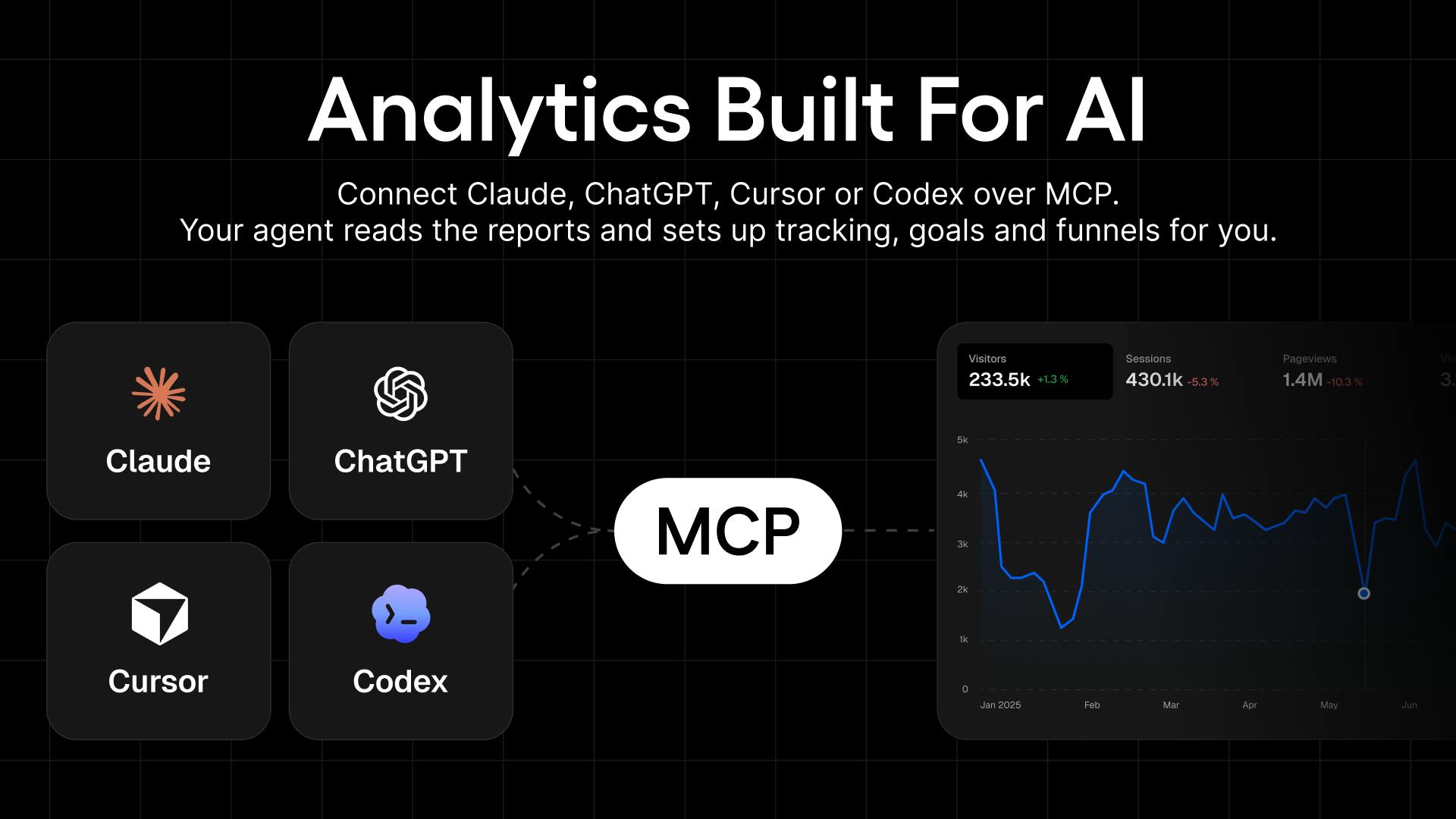
Statable is cookieless website analytics for small teams, site owners, and developers seeking a simpler alternative to Google Analytics and EU-hosted data. Its dashboard covers traffic and conversion reporting; its distinctive pitch is that AI assistants can read analytics and configure sites through Model Context Protocol (MCP). Product Hunt identifies Yevhen Skrypets as maker and describes the product’s privacy- and agent-oriented positioning (launch page).
Public pricing, documentation, a WordPress client, and MCP integration indicate a relatively complete early product; its daily rotating visitor identifier also means multi-day journeys cannot be linked.
These are execution signals, not proof of product-market fit. Revenue, paid customers, retention, growth, and acquisition cost are undisclosed. Product Hunt attention is preliminary; WordPress.org reports fewer than ten active plugin installations (WordPress listing).
At current prices Statable might support a small software business. Venture scale requires broader distribution or higher-value products. The evidence supports Watch.
Product Overview
Statable offers a lightweight tracking script and reports for traffic, engagement, events, goals, and funnels. Users can import Google Analytics history, connect Search Console, or use an API/MCP. MCP uses OAuth permissions and can configure sites, but not alter or delete analytics data (MCP guide).
All paid plans include the feature set and unlimited websites; tiers vary by combined monthly pageviews. Monthly prices range from $9 for 10,000 pageviews to $169 for 10 million, with custom pricing above that. A 30-day trial requires no card. Some .edu, GitHub Pages, and GitLab Pages sites qualify for free access if they display a public widget (pricing). Competitors and substitutes include GA4, Plausible, Fathom, Umami, Matomo, and server logs.
Privacy claims need qualification. The product says it sets no cookies or data on visitor devices. Its DPA nevertheless describes visitor identifiers as pseudonymised personal data, not anonymised data, and leaves legal-basis and notice duties with the customer acting as controller (DPA). This transparent distinction is positive; “no cookie banner” should not be interpreted as universal legal advice.
Founder and Team Assessment
Maker Yevhen Skrypets says he has built websites for over 20 years and created Statable after finding GA4 overly complex (maker statement). This is relevant but self-reported; no verified exits or detailed career history were found.
The legal operator is Key Arg B.V., a Dutch company. Statable’s LinkedIn page lists 2–10 employees, a company-reported band rather than a verified dedicated product team; Key Arg also offers SEO and web development (LinkedIn, company services). This may provide expertise or customer access, but product staffing, founder commitment, and separation from client work are unknown. No hiring signals were found; key-person and focus risk remain.
Founder Assessment: Strong apparent product execution and relevant self-reported web experience; commercial capability, commitment, and team depth are unverified.
Market Opportunity
The initial segment is site owners, small businesses, developers, and agencies seeking simple, privacy-oriented analytics. Willingness to pay is plausible, but customer choice and renewal are unproven.
A qualified-buyer count is unavailable. An illustrative, not measured, scenario of 10,000–100,000 accounts at $180–$660 annual spend implies $1.8–$66 million revenue. The range uses published 100K/1M tiers and is not a TAM estimate; the niche alone does not establish venture scale.
Expansion could target agencies, high-traffic sites, API reporting, and agent workflows. EU hosting may help, though enterprise buyers need stronger assurances. Neither privacy nor agents are exclusive.
Traction and Growth Signals
The Product Hunt page displays a #3 launch rank and 316 points; Statable’s LinkedIn update reported 308 upvotes and 727 product followers. These likely reflect different snapshots. Neither demonstrates retention or revenue. The founder describes early users as small teams, solo builders, and WordPress sites, without counts (Product Hunt, LinkedIn).
The WordPress plugin is actively updated but has fewer than ten active installations according to its directory listing. The public changelog shows frequent releases, including a September 28 MCP plugin update and September 25 Search Console/GA4 import changes (changelog). This verifies shipping, not meaningful usage.
Revenue, paid accounts, active usage, growth, retention, gross margin, and customer references are undisclosed. The key missing evidence is paid conversion and cohort retention among users acquired after launch.
Traction Assessment: Promising launch and shipping signals, but commercially unverified.
Competitive Position
Direct competitors include Plausible, Fathom, Umami Cloud, and Matomo. Statable lists $19 monthly at 100,000 pageviews and $69 at one million; Fathom lists $15 and $60 at those volumes. Umami Pro lists $20 for one million events, a different meter and not directly comparable (Statable, Fathom, Umami). GA4 is a free incumbent with broad reporting and distribution (Google documentation).
Lightweight tracking, EU hosting, MCP, and WordPress integration are coherent differentiators, but MCP is open and Umami also offers it. Data import offers limited switching costs; larger platforms can copy or bundle these features.
If a major platform copied its agent feature, Statable’s remaining reasons to stay would be simplicity, privacy design, and EU data location. Whether buyers value those enough to resist incumbents is unproven.
Defensibility Assessment: Low
Business Model and Economics
Subscription SaaS is priced by monthly pageviews: $84–$1,620 annually for 10K–10M tiers. Unlimited sites may suit agencies, while trial/free offers lower adoption friction. CAC, churn, expansion, margins, and hosting costs are undisclosed.
The lightweight script may aid cost control but does not prove margins. The DPA identifies Stripe as processor. MCP relies on third-party clients/models; incremental costs and monetization are unknown. At $180–$660 annual spend on common tiers, efficient acquisition and retention are critical. Higher-ACV tiers are hypothetical.
Unicorn Path
At an illustrative 10× ARR multiple, a $1 billion valuation requires about $100 million ARR. That equates to roughly 151,500 accounts at $660 annual revenue, 556,000 at $180, or 1.19 million at $84, before churn, discounts, fees, or costs. This is arithmetic, not a forecast.
No public traction supports that scale. The company would need repeatable global distribution, strong retention, higher-ACV agency/enterprise or API revenue, and proof that privacy and agent features drive adoption rather than launch curiosity.
Unicorn Path: Improbable
Valuation Assessment
Funding, investors, round, valuation, and fundraising status were not found; revenue and growth are undisclosed. Valuation Attractiveness: Not Assessable. A responsible assessment requires ARR, growth, margin, retention, burn, runway, terms, cap table, and investor rights.
Key Risks
- Commercial validation is absent: revenue, paid accounts, retention, and conversion are unknown.
- Low ACV could make paid acquisition and support uneconomic without organic distribution.
- GA4 is free and entrenched; privacy-first rivals are established.
- MCP and other product features may be copied; switching costs appear modest.
- WordPress adoption is early, with fewer than ten active installs reported.
- Founder commitment and dedicated team capacity are unclear; the operator also provides services.
- Daily ID rotation weakens multi-day attribution and may deter marketing teams.
- Privacy positioning can be misunderstood: the DPA calls data pseudonymised personal data and retains customer-controller duties.
Final Assessment
Venture Potential: 57/100
| Category | Score |
|---|---|
| Market Size and Expansion Potential | 13/20 |
| Traction and Growth Evidence | 5/20 |
| Founder and Team | 10/15 |
| Product Strength | 8/10 |
| Distribution Potential | 8/15 |
| Business Model and Economics | 7/10 |
| Defensibility | 6/10 |
| Total | 57/100 |
Product execution and expansion options are positives; missing commercial proof, low observed WordPress adoption, modest ACV, and limited defensibility weigh on the score.
Evidence Confidence: 48/100
Features, pricing, legal operator, updates, and directory status are verifiable. Founder history and headcount are self-reported; Product Hunt counts vary. Commercial, financial, funding, valuation, and dedicated team data are unknown. Market and unicorn figures are analyst scenarios.
Final Decision: Watch
The product merits observation, but evidence does not yet justify formal diligence. Product quality is promising; company quality, traction, and venture potential are under-verified. The unicorn path is improbable at current pricing, and valuation is not assessable. Neither Invest nor Pass/Hard Pass is supported.
Upgrade Conditions
- Verify a growing paid base and post-launch retention by signup cohort.
- Show conversion, CAC/payback, and repeatable acquisition beyond Product Hunt.
- Provide gross margin and infrastructure-cost data, including agency/high-volume users.
- Demonstrate WordPress or MCP as a measurable acquisition or retention channel.
- Clarify founder commitment, team allocation, financing needs, and terms.
Downgrade Conditions
- Product activity or reliability materially declines.
- Mature trial cohorts show weak conversion or retention.
- Competitors bundle similar agent features while Statable remains launch-dependent.
- Higher traffic creates uneconomic costs, or founder focus shifts away.
Questions for Further Diligence
- What are current MRR/ARR, paying accounts, and monthly growth, reconciled to billing records?
- What are 30-, 90-, and 180-day retention and logo churn by signup cohort?
- What is trial conversion by WordPress, agency, and direct-install channel?
- How many weekly active accounts use the dashboard, API, and MCP?
- What are CAC, payback, and acquisition mix across Product Hunt, search, clients, and referrals?
- What gross margin and infrastructure cost apply at 100K, 1M, and 10M pageviews?
- Who works full-time on Statable, and how are product priorities separated from Key Arg client work?
- What research supports daily ID rotation, and how many prospects reject the attribution trade-off?
- What security controls, incident process, uptime targets, and independent audits exist?
- Is the company fundraising; what round size, valuation/cap, dilution, and use of proceeds are proposed?
- Does MCP improve activation, retention, or willingness to pay compared with a dashboard alone?
- What is the roadmap for agencies, enterprise requirements, high-volume plans, and API expansion?