
Table of Contents
Sidebranch Investment Report
Category: Developer tools / code review (git-based visual diffing)
Company Stage: Free open-source side project; no evidence of a company entity, team, or revenue
Founder or Founders: Attributed by secondary sources to Cristobal Graña Samanez (“Cris Graña”), a design technologist currently leading product and design at Centauri Health Solutions; not named on the official site chatgate
Headquarters: Not publicly disclosed
Funding: Not publicly disclosed; no evidence of external funding was found
Business Model: Not publicly disclosed — the tool is free, with no pricing page producthunt
Product Hunt Launch Date: September 4, 2026 (per two independent launch trackers; the Product Hunt page shows “launched this week” without an explicit date) chatgate
Report Date: September 7, 2026
| Investment Metric | Assessment |
|---|---|
| Venture Potential | 36/100 |
| Unicorn Path | Improbable |
| Valuation Attractiveness | Not Assessable |
| Evidence Confidence | 35/100 |
| Final Decision | Pass |
Executive Summary
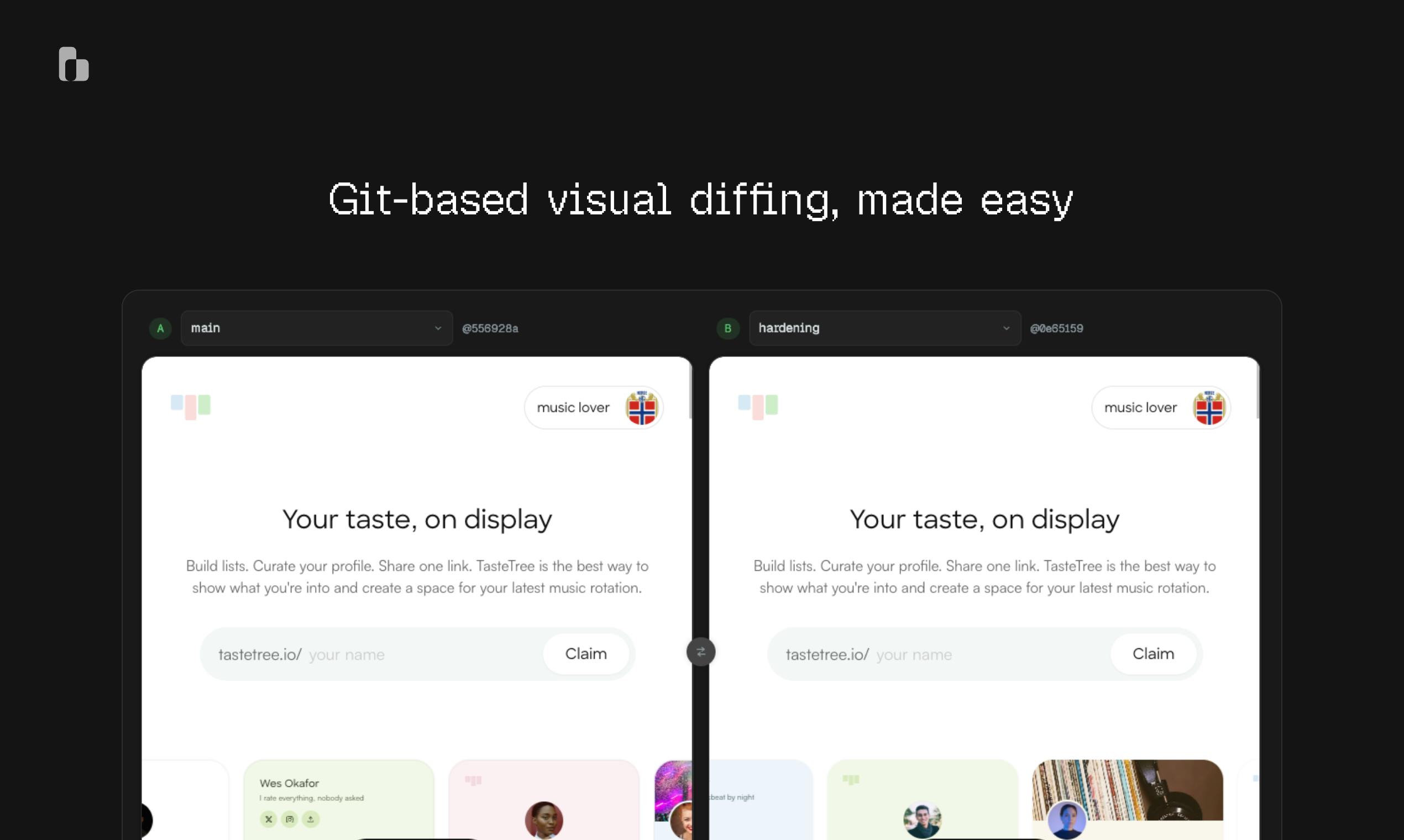
Sidebranch is a free browser extension plus local Node daemon that lets developers review pull requests visually from inside their running app: a pill widget switches branches into isolated git worktrees, each served by its own dev server, and a dedicated diff shell compares UI output side by side, in blend mode, or in onion-skin mode — without touching the developer’s working tree. It is framework-agnostic, built entirely on Node builtins with zero external dependencies, and communicates only over the local loopback interface. producthunt
The product is aimed squarely at a timely problem: in the agentic-coding era, the bottleneck in code review is shifting from reading diffs to visually verifying that an agent-generated PR looks and feels right. The launch copy explicitly frames the tool as serving “the last 1%” of PRs that still need human visual sign-off. producthunt
The strongest positive signal is the quality-to-scope ratio: the tool is well-crafted, security-conscious, and drew genuinely substantive engagement from developer commenters on Product Hunt, including thoughtful questions about agent integration and the extension–daemon security boundary. The apparent founder is a senior design technologist with GoDaddy and healthcare-tech experience whose public writing articulates exactly this product thesis. producthunt
The most important concern is more basic than any product question: there is no evidence of a company here. No legal entity, team, funding, pricing, or revenue model is publicly visible, and the apparent builder holds a full-time product leadership role elsewhere. This is a free, open-source side project, not a venture candidate in its current form. cristobalgrana
Venture Potential scores 36/100 — in the band suggesting a niche or bootstrapped business rather than a venture-scale company. The unicorn path is Improbable, and the valuation cannot be assessed. The final decision is Pass for a venture strategy, with clear conditions under which the decision could be revisited.
Product Overview
The customer problem: reviewing UI-affecting pull requests requires context-switching between the code diff, a terminal, and the running app, and manual branch-switching risks clobbering uncommitted work. With agent-written PRs multiplying, developers increasingly need to see “does this actually look right” rather than “what changed in the code”. producthunt
Sidebranch works as two local pieces. A Chrome/Edge extension injects an in-page “pill” widget into pages served by the developer’s local dev server. A local daemon (npx sidebranch start, bound to 127.0.0.1:49400) builds any selected branch in an isolated review worktree under ~/.sidebranch/, each pane running its own dev server, with untracked files like .env copied in per configuration. The diff view offers synchronized side-by-side viewports with width presets, pixel-blend diffs, and opacity-layer (“onion”) diffs. The repository is open source, and the daemon reportedly performs read-only git operations against the primary checkout — no stash, reset, or checkout. chatgate
Target users are frontend-adjacent developers and design-aware engineers at small-to-mid-size teams who review UI changes locally. Pricing is free; platforms are Chrome/Edge extension plus any Node environment, framework-agnostic. The product replaces the manual workflow of juggling git worktrees, stash/checkout cycles, or opening two browsers — and, partially, relying on deploy previews. sidebranch
Founder and Team Assessment
The official website and Product Hunt page do not name a founder. A secondary launch directory attributes the product to Cris Graña, which matches a verifiable public figure: Cristobal Graña Samanez, a Peruvian-born designer and engineer, previously Lead UX Engineer on GoDaddy’s Design Foundations team (January–September 2025) and currently leading product and design at Centauri Health Solutions, with an active GitHub presence (41 repositories) and prior side projects including a design-system generator (Trellis) and an iOS reading app (Ray). chatgate
Founder-market fit is credible: his June 2026 essay “Somebody still has to care” argues that as AI tools generate interfaces at scale, human care and verification become the ultimate quality filter — essentially the thesis Sidebranch productizes. Technical and design capability appear strong, evidenced by the product’s zero-dependency architecture and polish. cristobalgrana
However, nothing indicates a company or team: no LinkedIn company page, hiring, or co-founders were found. The apparent builder is employed full-time elsewhere, so commitment to Sidebranch is, by definition, part-time. The attribution itself rests on a single secondary source and should be treated as unverified in part.
Founder Assessment: Strong design-engineering craft and credible thesis-level founder-market fit, but this is a solo side project by a fully employed professional, with no team and extreme key-person concentration.
Market Opportunity
The initial segment is narrow: developers who review UI changes locally and care about visual verification — roughly, frontend and full-stack engineers at product teams, a subset of the world’s developer population. Willingness to pay is untested (the tool is free), but adjacent dev-tool products price around $5–25 per user per month (GitKraken, Graphite, and similar review tools sit in this band), implying roughly $60–300 per user annually. producthunt
A bottom-up estimate (analyst assumption): if 2–4 million developers worldwide meaningfully review UI PRs, and a realistic paying subset for a focused local diffing tool is 1–2% at ~$120 per user per year, the near-term serviceable revenue pool is roughly $2.5M–$10M ARR — a solid bootstrapped or small-acquisition business, not venture scale. Expansion paths exist (CI-integrated visual regression, agent-facing verification modes — which a commenter requested and the builder said is being considered ) but move the product into direct competition with established visual-testing platforms. producthunt
Timing is the strongest market argument: agentic coding is multiplying PR volume, and review tooling is an active, funded category in 2026. But timing benefits accrue to whoever captures the workflow at platform level. producthunt
Traction and Growth Signals
- Product Hunt: approximately 88 upvotes, ranking #11 daily and #73 weekly at launch; 96 followers; one review averaging 4.0. producthunt
- Comment quality was unusually substantive for a small launch: developers discussed agent-verification workflows, worktree resource limits, and the security boundary between extension and daemon — a sign of genuine developer interest, though from a very small base. producthunt
- The product is real and installable: live website, Chrome Web Store listing, and an npm package (
npx sidebranch). chatgate - Not available: user counts, downloads, GitHub stars, npm download volumes, active users, revenue, retention, and growth. No funding, hiring, partnerships, or press coverage of substance was found.
Launch attention (88 votes) is a one-day signal and proves nothing about sustained adoption. The most important missing metrics are weekly active installs and any evidence of retention beyond novelty use.
Traction Assessment: A credible, well-received micro-launch, but with no commercial or usage data of any kind.
Competitive Position
Direct and adjacent competitors include GitButler and native git worktree tooling (VS Code ships first-class worktree management and compare views), the Git Tree Compare VS Code extension, and agent-side skills such as Claude Code’s git worktree comparison. Indirect competition is stronger: deploy-preview workflows (Vercel/Netlify) already give reviewers a running instance of each PR, and visual regression platforms (Percy, Chromatic, Applitools) automate the same verification at CI level. Free alternatives are manual worktree juggling and opening two local servers. blog.gitbutler
Sidebranch’s differentiation is its local-first ergonomics: instant in-app branch switching, read-only guarantees for the working tree, zero dependencies, and loopback-only networking — a deliberately security-friendly posture. Pricing advantage is undefined (free). Distribution advantage is absent. Switching costs are low; there are no network effects, no proprietary data, and no workflow lock-in. chatgate
The decisive question — “if GitHub, VS Code, or Vercel shipped equivalent in-app branch diffing within six months, why would customers stay?” — has no strong answer. GitHub already owns the PR surface where this verification happens; VS Code already owns worktrees. code.visualstudio
Defensibility Assessment: Low.
Business Model and Economics
No revenue model is publicly disclosed. The tool is free, open source, and locally installed, which means it currently has near-zero marginal costs and equally near-zero revenue. Plausible future models include a paid pro tier (multi-repo support, CI integration), team licenses, or agent-verification APIs — none announced. Gross margin potential for a self-serve developer SaaS would be high if monetized, with modest support costs; there are no meaningful AI inference costs since the tool performs no model calls. The economics that matter are entirely hypothetical until pricing exists, and the operative commercial question — whether developers will pay for local visual diffing when deploy previews are bundled into hosting platforms they already pay for — is unanswered.
Unicorn Path
Assume the product eventually becomes a paid developer SaaS. A 10x ARR multiple is appropriate for a high-growth dev-tools subscription business at scale, consistent with how the sector’s public and acquired companies (GitLab, GitHub/Salesforce) have been valued.
Required Revenue for a $1 billion valuation ≈ $1B ÷ 10 = $100M ARR.
At a plausible $10 per user per month (~$120 annually), this requires roughly 830,000 paying developers — a very large share of the realistic paying audience for a niche local diffing tool, in a category where the workflow owners (GitHub, VS Code, Vercel, Chromatic) can bundle equivalents. Reaching that scale would require: forming a company, raising significant capital, building a team, monetizing a currently free tool, expanding from local diffing into CI/visual-testing (against funded incumbents), and establishing distribution the project does not have.
Unicorn Path: Improbable.
Valuation Assessment
No funding history, investors, round terms, or valuations are publicly known; there is no revenue to which a multiple could be applied.
Valuation Attractiveness: Not Assessable. There is no evidence of a financing event to evaluate. Assessment would require: any round size and terms (SAFE cap or post-money), user and revenue data if monetization begins, retention, and comparable financings in dev tools. A valuation derived from Product Hunt performance or product polish would be meaningless.
Key Risks
Ranked from most to least material:
- Not a company: no entity, team, or funding; the apparent founder works full-time elsewhere. cristobalgrana
- No monetization: free tool with no announced pricing or revenue model. producthunt
- Platform commoditization: GitHub, VS Code, and preview-deploy platforms can absorb the core function. code.visualstudio
- Founder dependency: solo project, part-time attention, no succession or team depth.
- Niche demand: local visual diffing is a genuine but narrow pain point; the paying subset appears small.
- Resource constraints on the user’s machine: multiple worktrees with separate dev servers is heavyweight, as a launch commenter noted. producthunt
- Security surface: the loopback daemon design drew informed skepticism about local-process access boundaries; unaddressed, this could limit enterprise adoption. producthunt
- Attribution uncertainty: founder identity rests partly on a single secondary source, and the official site names no one. chatgate
Final Assessment
Venture Potential: 36/100
| Category | Score |
|---|---|
| Market Size and Expansion Potential | 11/20 |
| Traction and Growth Evidence | 3/20 |
| Founder and Team | 7/15 |
| Product Strength | 6/10 |
| Distribution Potential | 5/15 |
| Business Model and Economics | 2/10 |
| Defensibility | 2/10 |
| Total | 36/100 |
The strongest elements are product craft and market timing (visual verification of agent-written PRs is a real, growing pain). The weakest are the absence of any commercial structure, near-zero traction beyond a one-day launch, and low defensibility against platform bundling.
Evidence Confidence: 35/100
Verified: product existence, features, install mechanism, free pricing, and launch metrics. Company-reported: essentially nothing beyond marketing copy. Estimated: market sizing above. Unverified in part: founder identity (single secondary source). Unknown: legal entity, team size, funding, users, downloads, GitHub statistics, revenue, and growth. This is a very thin public evidence base.
Final Decision: Pass
Sidebranch is a well-built, well-timed free tool, but it is not currently a venture investment: there is no company, no team, no funding, no pricing, no usage data, and a low-defensibility position against platforms that own the surrounding workflow. Pass reflects fit with a venture strategy, not product quality — as an open-source project or seed for a small bootstrapped business, Sidebranch is genuinely promising.
Upgrade Conditions
- The founder commits full-time and forms a company (or a team forms around the project)
- A paid tier launches with disclosed conversion or paying-user data
- Demonstrated organic adoption: e.g., tens of thousands of extension installs or sustained npm download growth
- A defensible wedge emerges, such as agent-facing visual verification (the direction the builder indicated he is exploring) adopted into CI workflows
- Institutional funding with a credible dev-tools go-to-market plan
Downgrade Conditions
- Product activity stops or updates cease (side-project abandonment)
- GitHub or VS Code ships equivalent in-app branch diffing
- No monetization attempt within 12 months
- Security concerns around the local daemon surface are raised and left unaddressed
- Evidence that launch claims misrepresent the product’s maturity or adoption
Questions for Further Diligence
- Is a legal entity being formed, and does the founder intend to work on Sidebranch full-time?
- What are current weekly active installs across the Chrome Web Store and npm?
- What is the intended pricing model, and what early willingness-to-pay evidence exists?
- How many of the launch-day adopters are still active after 30 and 90 days?
- What share of usage is human review versus agent-initiated verification?
- How will the extension–daemon security boundary be hardened for enterprise use?
- What is the roadmap for CI integration, and how will the product compete with Percy/Chromatic rather than complement them?
- How does the product handle monorepos and resource-heavy dev servers when multiple worktrees run concurrently?
- Is the founder seeking funding, and on what terms?
- What prevents GitHub or VS Code from bundling this capability, in the founder’s view?
- Are there any enterprise pilots or team deployments underway?
- What is the long-term licensing plan for the open-source repository?
Sources
- Product Hunt — sidebranch producthunt
- sidebranch.dev — official website sidebranch
- Launly — launch metrics mirror (secondary) launly
- ChatGate — launch analysis and founder attribution (secondary) chatgate
- Cristobal Graña Samanez — personal site cristobalgrana
- Cristobal Graña Samanez — LinkedIn linkedin
- “Somebody still has to care” — founder essay cristobalgrana
- GitHub — cristobalwee profile github
- VS Code — branches and worktrees documentation (competitive context) code.visualstudio
- GitButler — worktrees discussion (competitive context) blog.gitbutler
- Product Hunt — code review tools category (market context) producthunt