
Table of Contents
Superagent Investment Report
Category: AI coding-agent interface; local desktop developer tools
Company Stage: Pre-commercial open-source project
Founder or Founders: Pung Worathiti Manosroi, identified as the maker; no separate incorporated company verified
Headquarters: Not publicly disclosed
Funding: No reliable public funding information found
Business Model: Currently free and MIT-licensed; no commercial model publicly disclosed
Product Hunt Launch Date: August 30, 2026
Report Date: September 2, 2026
| Investment Metric | Assessment |
|---|---|
| Venture Potential | 48/100 |
| Unicorn Path | Conditional |
| Valuation Attractiveness | Not Assessable |
| Evidence Confidence | 56/100 |
| Final Decision | Watch |
Executive Summary
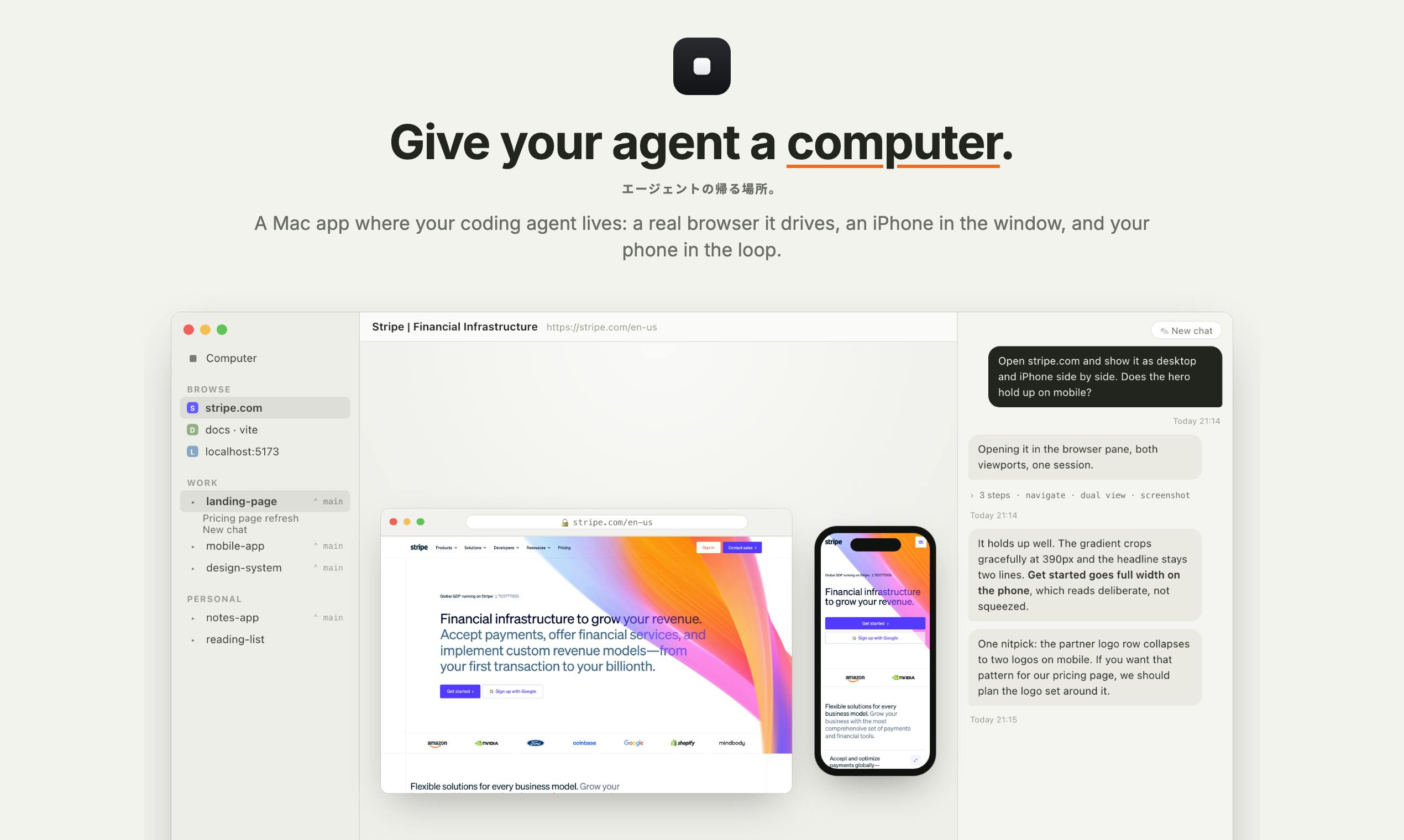
Superagent is a local macOS application that gives coding agents a graphical workspace rather than requiring users to operate them through a terminal. It places agent conversations beside a controllable browser, project files, git worktrees, and an iOS Simulator. A companion iPhone application lets users monitor sessions and approve actions remotely (official website; desktop repository).
The product is differentiated at the interface and workflow level. Its emphasis on visible browser execution, local operation, isolated branches, persistent sessions, mobile approvals, and no additional AI subscription addresses genuine usability and supervision problems associated with command-line coding agents. Product quality appears strong for a new solo-developed project, although adoption and reliability evidence remain limited.
The strongest signal is execution velocity. The public desktop repository was created on July 28, 2026, had reached version 1.7.27 by September 1, and showed 645 contributions from its single listed contributor. The desktop application, iOS client, and encrypted relay are all available under the MIT license. This demonstrates product-building capability, but not commercial traction (GitHub repository data; contributors).
The central investment problem is that Superagent is explicitly free, uses customers’ existing Claude Code or Codex subscriptions, has no account system, and has no hosted application server. Revenue, users, retention, downloads, enterprise demand, and fundraising activity are not publicly disclosed. The current architecture is optimized for privacy and adoption rather than monetization.
The decision is Watch. The project is too early and commercially undefined for formal due diligence, but its founder, product execution, and potentially important agent-control layer merit monitoring. An upgrade would require a credible commercial offering, sustained adoption beyond launch, multi-platform support, and evidence that teams will pay without undermining the open-source privacy proposition.
Product Overview
Coding agents can edit files, run commands, and build software, but many still expose their work through terminal output or IDE panels. That creates friction for less technical users and makes browser or mobile-interface verification cumbersome.
Superagent provides a Mac application in which each task can run in a separate git worktree and branch. Conversations persist across restarts, while the agent can operate a browser using an isolated logged-in profile. Developers can watch web changes, inspect files, run an iOS Simulator, schedule routines, and receive actionable notifications.
The optional iPhone and iPad client mirrors the Mac session and lets users send instructions or approve actions. Communication uses a relay that the project says forwards end-to-end-encrypted messages without holding decryption keys. The relay can also be self-hosted (iOS repository; relay repository).
Superagent currently works with Claude Code and Codex, with additional agent support planned. It requires an Apple Silicon Mac; Xcode is required for simulator functionality. The mobile application is distributed through TestFlight rather than a verified public App Store listing.
There is no Superagent subscription. The user pays the underlying model or coding-agent provider directly. This removes duplicate billing and minimizes inference risk for the project, but it also leaves Superagent without a demonstrated revenue source.
Product Quality Assessment: Thoughtful and technically credible early product, with significant platform limitations and limited independent validation.
Founder and Team Assessment
The Product Hunt maker and GitHub repository owner are identified as Pung Worathiti Manosroi. His personal site lists current work as Head of Product and Design at WePush Media, following roles at Checkmk and ProSiebenSat.1 Digital. It also lists prior experience as a full-stack developer at Siemens and co-founder or product leader at Combyne and Betterfront (personal site).
Betterfront’s official team page describes Manosroi as a co-founder and CPO who previously helped grow Combyne to three million users. Betterfront’s website now states that the company is part of iAltA, although transaction terms and Manosroi’s personal outcome are not publicly disclosed (Betterfront team; Betterfront).
This background suggests unusually strong product-design and technical breadth for a solo maker. Superagent’s interface, desktop application, mobile client, relay, documentation, and release cadence reinforce that assessment.
However, the public GitHub contributor list shows only one contributor to the desktop repository. Manosroi’s personal site also lists a current role outside Superagent. It is therefore unclear whether Superagent is a full-time company, a prospective startup, or an independent project. No employees, co-founders, hiring plans, legal entity, or dedicated commercial team were verified.
Founder Assessment: Strong product and technical execution, but full-time commitment, team formation, and commercial ambition remain unverified.
Market Opportunity
The narrow initial segment is Apple Silicon Mac users who already use Claude Code or Codex and want a visual, local interface for parallel coding-agent work. This is a meaningful but materially smaller market than “all software developers.”
No reliable public figure was found for the number of paid Claude Code or Codex users on compatible Macs. Consequently, a verified bottom-up market calculation is not possible.
An illustrative scenario shows the hurdle. If a future Pro version cost $20 per month, 100,000 paid users would produce $24 million in ARR. At a $40 monthly team-seat price—similar to Cursor’s published team price—50,000 seats would also produce $24 million. These are analyst scenarios, not current Superagent pricing or forecasts (Cursor pricing).
Expansion opportunities include Windows and Linux support, team administration, enterprise policy controls, audit logs, shared routines, approved-agent registries, hosted encrypted synchronization, support contracts, and managed deployment. The local-first architecture can appeal to privacy-sensitive developers, but enterprise monetization would likely require services that the current no-account, no-server design deliberately avoids.
The category can support venture-scale businesses, but Superagent’s present serviceable segment and zero-price model do not yet establish a venture-scale market capture strategy.
Traction and Growth Signals
Superagent launched on Product Hunt on August 30, 2026 and ranked tenth that day. The page displayed 118 followers and one review with a 4.0 rating when reviewed (Product Hunt; daily leaderboard). These are launch-awareness indicators, not product-market fit.
The desktop GitHub repository had 24 stars and four forks as of September 2, 2026. It was created on July 28 and remained active through September 1. The iOS repository was created on August 28 and had one star. These figures demonstrate recent development but limited open-source adoption.
The newest desktop release artifact had only a small number of direct GitHub downloads at the time checked. Auto-update metadata and repeated release downloads make individual artifact counts an unreliable proxy for unique users, so no user estimate is made.
There are no verified revenue figures, active-user counts, retention cohorts, enterprise contracts, customer case studies, app-store ratings, or sustained post-launch usage data.
Traction Assessment: Active development and early launch interest, but adoption and commercial traction are unverified.
Competitive Position
Direct alternatives include graphical coding-agent environments and agent orchestration tools such as Cursor, Orca, Conductor, Emdash, and Google Antigravity. Indirect competitors include Claude Code and Codex themselves, cloud agents, IDE extensions, and application builders such as Replit, Lovable, Bolt, and v0.
Superagent’s differentiation is the combination of:
- Local-first execution with no Superagent account
- Visible browser control using an isolated logged-in session
- Per-conversation git worktrees
- Integrated iOS Simulator
- Remote mobile supervision and approval
- Open-source desktop, mobile, and relay components
The principal weakness is dependency on underlying agent providers. Anthropic already distributes Claude Code across terminals, IDEs, web environments, and collaboration tools, while OpenAI positions Codex as a multi-agent command center with worktrees, cloud environments, and scheduled tasks (Claude Code; Codex). These providers can progressively absorb Superagent’s orchestration and interface features.
If Anthropic, OpenAI, or Cursor launched equivalent local browser, simulator, and mobile-control functionality within six months, customers might remain for Superagent’s open source, privacy, interface quality, and provider neutrality. Those advantages are credible but may not create strong switching costs. Projects, conversations, and git branches remain portable, and no proprietary data or network effect is apparent.
Defensibility Assessment: Low
Business Model and Economics
Superagent currently has no disclosed revenue model. It is free, carries an MIT license, and routes inference directly through users’ existing Claude Code or Codex access. This produces low centralized inference expense but also no apparent recurring revenue.
Possible models include:
- Paid team administration and policy controls
- Enterprise support and deployment
- Managed encrypted relay infrastructure
- Signed commercial builds and compliance features
- Cross-platform Pro functionality
- Hosted shared memory, routines, and organizational knowledge
- Paid integrations or an agent marketplace
A consumer subscription would need to offer value beyond the open-source application without alienating the privacy-oriented user base. Enterprise functionality may be more defensible, but it would require identity, access controls, audit logs, security certifications, support, and a larger team.
Infrastructure costs are currently modest because work and model usage remain local. A hosted collaboration layer would introduce cloud, security, support, and potentially inference costs. Gross margin is not assessable without a defined product and pricing model.
Unicorn Path
An 8× ARR multiple is assumed for a high-growth developer-tools company with strong retention and software-like gross margins. A lower multiple would apply if revenue depended heavily on services.
Required ARR = $1 billion ÷ 8 = $125 million.
Illustrative customer requirements are:
- At $240 annual individual revenue: approximately 520,833 subscribers
- At $480 annual team-seat revenue: approximately 260,417 paid seats
- At an assumed $25,000 enterprise ACV: 5,000 enterprise customers
- At an assumed $100,000 enterprise ACV: 1,250 enterprise customers
All prices and enterprise ACVs are analyst scenarios; Superagent currently charges nothing.
A unicorn path would require conversion from an open-source project into a commercial platform, support for Windows and Linux, provider-neutral agent orchestration, team collaboration, enterprise governance, durable distribution, and hundreds of thousands of paid seats or a significant enterprise business.
Unicorn Path: Conditional
Valuation Assessment
No reliable evidence was found of company funding, investors, a financing round, SAFE terms, secondary transactions, acquisition offers, or a current valuation. No dedicated legal entity was verified.
The founder’s prior company Betterfront became part of iAltA, but that transaction does not establish Superagent’s current value. Cursor and other developer-tool businesses validate demand, but their financing or pricing cannot justify a valuation for a pre-revenue project without comparable adoption and retention.
Valuation Attractiveness: Not Assessable
Required information includes legal ownership, cap table, intellectual-property assignment, current revenue, growth, active installations, retention, proposed round size, valuation or SAFE cap, burn, runway, and investor rights.
Key Risks
- No business model: The product is explicitly free and provides no evident monetization mechanism.
- Platform replication: Anthropic, OpenAI, Cursor, or Apple could bundle comparable functionality.
- Unverified adoption: Public GitHub and Product Hunt engagement remain small.
- Founder commitment: The maker publicly lists another current employment role.
- Single-person execution: One contributor appears responsible for most or all product development.
- Platform concentration: The desktop product currently requires Apple Silicon.
- Security exposure: Browser automation operates within logged-in sessions and can perform sensitive actions.
- Provider dependency: Changes to Claude Code or Codex interfaces, pricing, or policies could break the product.
- Open-source monetization tension: The MIT license permits competitors to reuse and commercialize the code.
- Naming confusion: Several unrelated products use “Superagent,” creating brand and search-discovery risk.
Final Assessment
Venture Potential: 48/100
| Category | Score |
|---|---|
| Market Size and Expansion Potential | 14/20 |
| Traction and Growth Evidence | 5/20 |
| Founder and Team | 11/15 |
| Product Strength | 8/10 |
| Distribution Potential | 5/15 |
| Business Model and Economics | 1/10 |
| Defensibility | 4/10 |
| Total | 48/100 |
The strongest elements are product design, technical execution, privacy architecture, and founder experience. The weakest are the absence of monetization, minimal adoption evidence, single-person dependency, and low structural defensibility.
Evidence Confidence: 56/100
Product functionality, source code, release activity, license, founder identity, and selected founder experience are publicly verifiable. The founder’s previous user-growth claim is sourced from a former company’s biography rather than audited records. Superagent’s legal entity, team, funding, users, retention, revenue, economics, and fundraising status are unavailable.
Final Decision: Watch
Superagent is an impressive early product but not yet an investable company. A venture-scale outcome requires both evidence of sustained demand and a commercial layer that does not compromise the product’s local-first differentiation.
Upgrade Conditions
- At least 25,000 verified monthly active desktop installations.
- Strong 90- and 180-day retention among coding-agent users.
- Introduction of paid team or enterprise functionality.
- Initial ARR above $500,000 with evidence of repeatable conversion.
- At least five referenceable enterprise design partners.
- Windows or Linux support, or evidence that the Mac-only segment is sufficient.
- Formation of a dedicated company and confirmation of full-time founder commitment.
- Independent security review of browser control and mobile relay components.
Downgrade Conditions
- Development activity materially declines after launch.
- Underlying providers replicate the interface and remote-control features.
- Users reject paid functionality because the open-source version is sufficient.
- A browser-credential, relay, or approval-system security incident occurs.
- Third-party API changes make agent integration unreliable.
- The founder does not transition to sustained full-time development.
Questions for Further Diligence
- Is Superagent operated through a legal entity, and who owns the intellectual property?
- Is the founder working full-time on the project?
- How many unique installations and weekly or monthly active users does it have?
- What are 30-, 90-, and 180-day retention and task-frequency metrics?
- Which features drive repeated use: browser control, worktrees, simulator access, or mobile approval?
- What commercial model is planned without weakening the open-source proposition?
- Have teams indicated willingness to pay, and at what seat or organization price?
- What security review has been completed for logged-in browser sessions and remote approvals?
- How resilient are the Claude Code and Codex integrations to provider changes?
- What are current burn, runway, team plans, and financing requirements?
- What round terms, valuation or SAFE cap, and investor rights are proposed?
- How will Superagent defend against equivalent functionality from model providers and IDE incumbents?
Sources
- Product Hunt – Superagent
- Product Hunt daily leaderboard, August 30, 2026
- Official Superagent website
- Superagent desktop GitHub repository
- Superagent iOS GitHub repository
- Superagent relay GitHub repository
- Founder’s personal profile
- Betterfront founder biography
- Claude Code
- OpenAI Codex
- Cursor pricing