
Table of Contents
HireKey — Venture Investment Report
| Company field | Assessment |
|---|---|
| Category | AI job-search platform / career tools |
| Company Stage | Early commercial / pre-seed-like (inferred from recent launch; financing undisclosed) |
| Founder(s) | Nela Davis and Lance Davis Jr. |
| Headquarters | Not publicly disclosed |
| Funding | No public funding round or amount identified |
| Business Model | Freemium subscription: free plan; Premium $39/month; optional credit packs |
| Product Hunt Launch Date | 2026/10/11 |
| Report Date | 2026/10/14 |
| Investment metric | Assessment |
|---|---|
| Venture Potential | 59 / 100 |
| Unicorn Path | Conditional |
| Valuation Attractiveness | Not Assessable |
| Evidence Confidence | 55 / 100 |
| Final Decision | Watch |
Executive Summary
HireKey is an AI job-search platform for competitive roles, especially in technology. It combines role-fit analysis, resume tailoring, live voice interview coaching, application tracking, cover letters, and company research (overview).
Nela Davis reports ten years recruiting at Microsoft, Amazon, and Stripe; Lance Davis Jr. has a sales background. Their approach aims to clarify candidates’ real experience, not invent qualifications or predict hiring decisions (founders, methodology).
HireKey offers a free tier and $39/month Premium, which expands monthly session limits and adds pipeline insights (pricing). Product Hunt showed 200 points when reviewed, a launch signal rather than evidence of paid demand or retention (Product Hunt).
Job-search software is crowded and often used only during a search. Teal and Jobscan offer overlapping resume, tracking, and interview tools; Teal’s paid plan is $29 monthly (Teal, Jobscan). HireKey has not disclosed paid users, retention, CAC, or revenue.
Recommendation: Watch. The founder’s recruiting experience and integrated workflow justify monitoring, but investment requires proof that users pay, achieve better outcomes, and remain active or return for future searches.
Product Overview
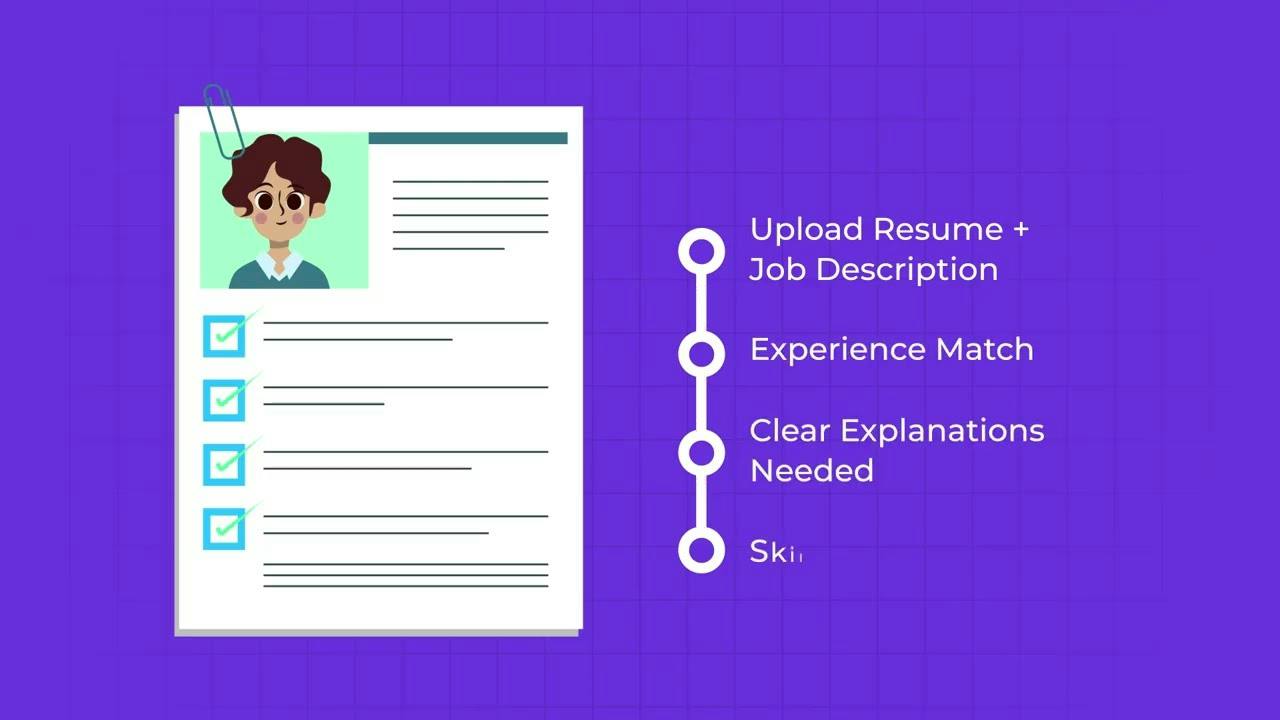
HireKey starts with a candidate’s resume and a specific job. It compares experience with role requirements, highlights fit and gaps, tailors the resume while keeping edits reviewable, and supports spoken interview practice with responsive follow-up and feedback. Users also track applications, deadlines, and next steps; company research and cover letters extend preparation across the application funnel (product walkthrough).
The product page presents a freemium model: five monthly resume-tailoring and interview-practice sessions, two live voice sessions, five cover letters, five research briefs, and unlimited application tracking in Free; Premium raises these to 50 resume and interview sessions, 10 voice sessions, and unlimited letters/research for $39 monthly (pricing and limits). Resumes and spoken answers can contain sensitive personal data.
Founder and Team Assessment
HireKey identifies Nela Davis and Lance Davis Jr. as co-founders. Nela’s recruiting background is directly relevant to the product’s methodology; Lance contributes sales experience. The company has published a methodology, privacy, and data-security policy, which is useful early-stage operating discipline; independent security certification is not reported.
Founder Assessment: Nela’s stated recruiting experience gives HireKey credible domain insight, while the undisclosed team and unverified operating record leave execution capacity uncertain.
Market Opportunity
The target is active job seekers, not everyone who wants a resume. BLS counted 7.109 million unemployed people in September 2026—a broad reference pool, not HireKey’s addressable market (BLS).
A transparent scenario: assume 5%–10% of that group are in the competitive professional and technology roles HireKey targets, and each paying user subscribes for three months at $39/month. That implies approximately 355,000–711,000 potential users and $42M–$83M of gross spend for one search cycle if every person in that subset paid. The role-share and subscription duration are analyst assumptions, and 100% paid conversion is unrealistic; this is an upper-bound cohort scenario, not a forecast or total market estimate.
Traction and Growth Signals
Product Hunt showed 200 points, a one-month Premium promotion, and a request for feedback. These are launch signals; no paid-user, conversion, retention, interview, or placement results were disclosed (launch page).
Its connected workflow links role-fit to resume edits and interview practice; the commercial challenge is that job searches are episodic, requiring efficient acquisition or repeat career use.
Traction Assessment: Product completeness and launch attention are visible, but paid adoption, user outcomes, and retention are not yet established.
Competitive Position
Competitors include full-stack job-search tools and resume/interview specialists. Teal offers tracking, resumes, and interview practice for $29 monthly; Jobscan combines AI resume coaching, tailoring, tracking, auto-apply, and interview practice (Teal, Jobscan).
HireKey’s most credible wedge is recruiter-informed role-fit reasoning paired with interview voice coaching and a consistent account of the candidate’s real experience. Nela’s domain experience may help the product avoid generic resume advice. However, competitors can add voice coaching or recruiter guidance, and there is no proprietary job inventory or distribution partnership disclosed. The privacy policy says candidate data is not sold or provided to employers, while disclosing account-linked analytics/session replay and possible U.S. provider transfers (privacy, security).
If the largest platform in this market launched the same feature within six months, why would customers continue using this product? HireKey needs to answer with demonstrably better recruiter-informed guidance, trusted coaching outcomes, and a cohesive workflow—not just AI-generated text.
Defensibility Assessment: Low. Domain insight and accumulated candidate context could support quality, but no exclusive data, distribution, or network effect is evident.
Business Model and Economics
HireKey offers free access to drive adoption and a $39 monthly Premium subscription, with optional paid credit packs. Premium currently includes up to 50 resume-tailoring and interview sessions and 10 voice sessions each month (pricing). Conversion must happen during a short job-search window.
At $39 per month, a year-round subscriber yields $468 ARR. If a typical customer pays for only three months, revenue per search is $117 and re-acquisition becomes a core economic requirement. Voice inference, resume processing, support, and paid acquisition could consume that revenue. OpenAI handles AI generation/coaching, Stripe billing, and PostHog analytics; costs, gross margin, CAC, and payback are undisclosed (security policy).
Unicorn Path
A $1B outcome requires repeatable cohorts, efficient distribution, and products used beyond a single job search. Using an illustrative 8x ARR valuation assumption, $1B would require $125M ARR. At $39 per month, that equals about 267,000 subscribers paying year-round. If customers pay for three months on average, it requires roughly 1.07 million paid search cycles annually. These figures exclude discounts, churn, and costs.
The assumed multiple is a scenario, not an observed HireKey valuation. For context, Software Equity Group reported 4.0x median EV/TTM revenue for SaaS M&A in Q2 2026, a transaction benchmark that is not directly comparable to an early-stage consumer subscription company (SEG quarterly report).
Unicorn Path Classification: Conditional. The product must prove high-volume and efficient acquisition, strong outcomes, and ways to retain or re-engage users across career transitions.
Valuation Assessment
Valuation Attractiveness: Not Assessable. No funding terms, valuation, cap table, or financing history was identified. A consumer subscription product with unproven retention cannot be valued responsibly without price, cohort economics, and dilution data.
Key Risks
- Episodic use and churn: candidates may cancel after a search ends.
- Crowded category: Teal, Jobscan, and new AI tools already cover major workflow components.
- Acquisition economics: users may be costly to reach during a short, competitive search window.
- Unverified outcomes: no evidence yet that recommendations improve interviews or placement rates.
- AI accuracy and candidate trust: fabricated or overstated resume claims could harm users; review controls are essential.
- Sensitive data: resumes, voice responses, and career details create privacy and security exposure.
- Analytics/session replay: the company says replay may capture visible page content and inputs outside live coaching; user consent and redaction practices need validation.
- No reported SOC 2: the company states it does not currently hold a SOC 2 report, which may limit trust among cautious users and partners (security policy).
- Founder/key-person risk: domain expertise appears concentrated in the co-founder’s recruiting experience; team depth is unknown.
- Seasonality and macro sensitivity: hiring freezes can reduce both job-search activity and users’ willingness to pay.
Final Assessment
| Factor | Score |
|---|---|
| Problem intensity and product relevance | 16 / 20 |
| Market size and expansion potential | 14 / 20 |
| Differentiation and defensibility | 11 / 20 |
| Traction and product-market-fit evidence | 5 / 20 |
| Team, economics, and execution evidence | 13 / 20 |
| Venture Potential | 59 / 100 |
Evidence Confidence: 55 / 100. Company pages document the product, price, founders, and policies; commercial performance, retention, CAC, and financing remain undisclosed.
Final Decision: Watch.
Upgrade conditions: verify paid cohorts with strong trial-to-paid conversion; show that users complete practice and application workflows; produce customer-level evidence of improved interview rates or job outcomes; demonstrate efficient CAC and positive gross margin; and show meaningful repeat usage or referrals.
Downgrade conditions: weak conversion, short paid tenure without efficient acquisition, little engagement with voice coaching, materially inaccurate resume guidance, or unresolved data handling concerns.
Due Diligence Questions
- How many registered, monthly active, and paying users exist by acquisition cohort?
- What are free-to-paid conversion, average paid tenure, churn, refunds, and repeat-search usage?
- Do users report measurable increases in recruiter screens, interviews, or offers versus a baseline?
- What is CAC by channel, and how many paid months are needed to recover it?
- What are gross margins by feature, especially voice coaching and resume tailoring?
- How are factual resume claims grounded in user-provided evidence and checked before export?
- What exact data can PostHog session replay capture, and how are consent, masking, and deletion enforced?
- Which providers receive resumes or coaching inputs, in what regions, and under what retention/training terms?
- What is the founders’ full-time commitment, technical team composition, runway, and financing history?
- What is the roadmap for repeat use outside an active job search?
Sources
- HireKey official product and pricing
- HireKey founders
- HireKey methodology
- HireKey privacy policy
- HireKey data security and retention
- HireKey Product Hunt launch
- BLS September 2026 unemployment table
- Teal plan comparison
- Jobscan AI resume suite
- Software Equity Group SaaS report
Conclusion
HireKey has relevant recruiting insight and a coherent live product, but demand, outcomes, retention, and acquisition economics remain unproven. Keep it on Watch pending evidence of durable revenue.